Grown-Up Goals. Kid-Sized Joy. Learning in disguise.
Music and Movement Center
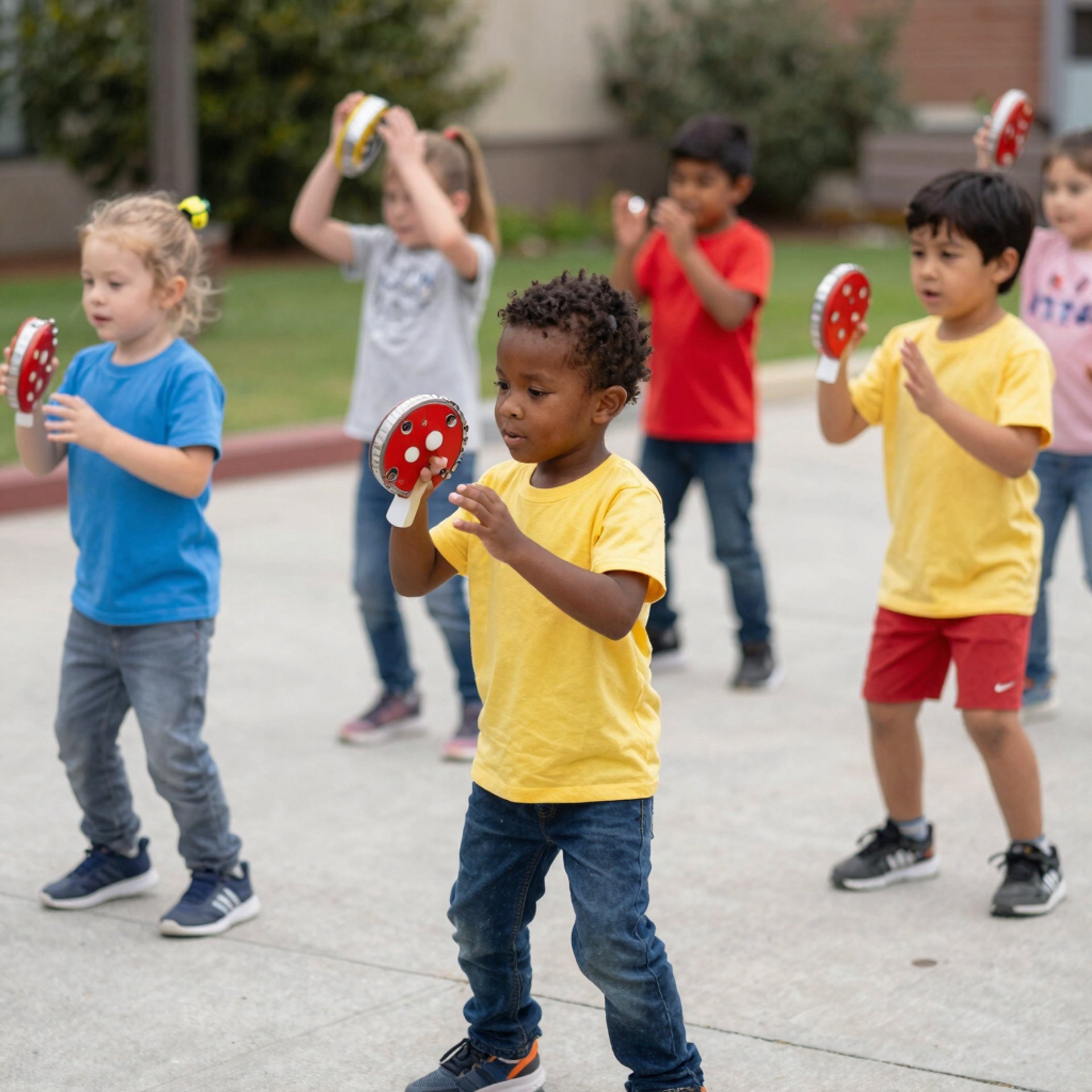
Singing, dancing, moving to music, exploring rhythm and tempo, developing gross motor skills, and expressing emotions through movement.
Playing with music is a whole-body experience for children. A Music and Movement kit is one of the most effective tools for transitions, burning off energy before a meal, or reinforcing a lesson through rhythm. You will need items that are durable, easy to sanitize, and safe for smaller hands. Use a variety of child-friendly musical instruments (shakers, tambourines, drums, xylophones, bells, triangles, beanbags, hula hoops, and ribbon wands or scarves) to create flowing movements and dance routines.
Rhythm & Percussion Instruments
These help children internalize the "beat" and develop hand-eye coordination.Egg Shakers: Perfectly sized for toddlers and preschoolers. They are easy to clean and nearly impossible to break.
Rhythm Sticks: Great for tapping out the syllables in names or "Alphabetical Animal" names. Look for smooth, finished wood.
Wrist Bells: These are excellent for younger children who haven't mastered "holding" an instrument yet—they can just shake their arms to the beat.
Tambourines & Hand Drums: Practice self-regulation by stopping immediately when the sound stops. For "Stop and Go" games where children move when they hear the beat and freeze when it stops. These work well with Freeze Dance.
Triangles: These introduce a different, higher-pitched sound and require more focused fine motor control to hold the string.Lightweight scarves move slowly through the air, making them perfect for "slow vs. fast" tempo lessons.
Provide a CD player or music player with a selection of age-appropriate music (nursery rhymes, children's songs, instrumental music).
Beanbags - Use these for balancing on heads while walking to music or tossing into "goal" hoops during a song.
Hula hoops
Parachute - An 8-foot or 12-foot parachute is a preschool staple. It encourages teamwork as children must work together to make the "waves" or keep a ball in the middle.
Stretch Bands (Connect-a-Bands): A large, latex-covered bungee loop that children hold onto in a circle. It helps them feel the resistance and stay in their own space.
Ribbon wands and Scarves with different textures.
Mirrors - Children love seeing themselves dance.
Music-themed books
Portable Bluetooth Speaker: A rugged, rechargeable speaker that you can move from the indoor classroom to the outdoor play area.
Laminated Song Cards: Create a "Song Choice" board with pictures representing different songs (e.g., a bus for The Wheels on the Bus). This allows children to choose the next activity.
Sanitizing Mesh Bags: You can place plastic instruments (like egg shakers and bells) inside a mesh laundry bag to dunk them into a sanitizing solution quickly.
Instrument Exploration:
I am a Music Man (Cocomong Song For Kids) A fun song for children to explore the different sounds that each instrument makes.
Set up stations with different types of musical instruments (e.g., percussion, wind, string).
Introduce the concept of musical instrument families (e.g., percussion, wind, string).
Have children sort instruments into their families.
Have them experiment with different ways to play the instruments.
Sound Scavenger Hunts: Have the children close their eyes and listen to the sounds around them. Then try and identify the sounds.
"Musical Movement Games with Props":
Move like the "Alphabetical Animal" of the week (slow like a Snail, fast like a Fox).
Play musical games like "musical chairs" or "freeze dance."
Adapt games to incorporate musical instruments and scarves.
Encourage children to move their bodies in different ways (up, down, fast, slow).
Play rhythm games like clapping and tapping.
Have the children move through the obstacle course to the music.
Singing and Dancing:
Play music and encourage children to sing along and dance.
Introduce simple dance steps and movements.
Use lights, and props to make a fun area to dance.
Up and Down the Scale! Stretch and Sing for Kids An interactive music video that teaches how to sing the scale in a simplified way. Children are encouraged to stretch and use music to calm down. The songs are sung along the scale.
Listening Activities:
Play different types of music and have children listen for specific instruments or sounds.
Calming Classical Music for Kids | The Good and the Beautiful
Discuss how different music makes them feel.
Musical Storytelling:
Encourage children to express themselves through creative movement and dance.
Have them act out stories or songs through movement and song.
Create a small stage or puppet theater for children to act out musical stories.
Use props, costumes, and musical instruments to enhance the storytelling.
Sensory Music Exploration:
Incorporate sensory materials into music and movement activities (e.g., textured scarves, shakers filled with different materials).
Have the kids shake their egg shakers all the way to their next area to keep hands busy and out of trouble.
Use a light projector to create visual effects that complement the music.
Discuss how music and movement are used in everyday life (e.g., dancing at parties, singing songs, playing instruments).
Transform the center into different musical environments (e.g., "Under the Sea" with blue lights and ocean sounds, "Jungle Jam" with green streamers and animal sounds).
Use props and decorations to create a multisensory experience.
Take children to a musical performance or concert.
Watch online performances especially geared to children.
Invite musicians or dancers to visit the classroom and share their talents.
Musical Instrument Making with Recycled Materials:
Encourage children to create their own musical instruments using recycled materials (e.g., shakers from plastic bottles, drums from coffee cans).
Discuss the different sounds that different materials make.
"Musical Performance":
Have the children work together to create a musical performance of singing, dancing, and instrumental music. You might want to record some of the kids' favorite songs to include as a digital "soundtrack" for the families at the end of the year.
"Virtual Musical Experiences":
Use online resources to explore different musical cultures and instruments.
Use tablets or computers to record and play back children's musical creations.
Take virtual tours of concert halls or music museums.
Questions? Comments? Concerns?
info@joyfulletters.com
Affiliate Disclosure: Some of the links on this page are affiliate links. As an Amazon Influencer, a Walmart Partner, and an affiliate for select educational brands, I earn a small commission from qualifying purchases. This never raises the price for you. I only recommend items that add true value to a play-based learning environment. Thank you so much for supporting our page!
© Joyful Letters 2025-2026 ALL RIGHTS RESERVED. Permission is given to reproduce for individual classroom use. Our content material is not to be resold.