Grown-Up Goals. Kid-Sized Joy. Learning in disguise.
Block Building Center
Materials: Various sizes and shapes of blocks (wooden, plastic, foam, magnetic blocks, large soft blocks), construction toys, vehicles, and people. (There are pros and cons to the different blocks. Wooden blocks last a long time, but they hurt when children throw them. Plastic blocks are easy to clean, but they can break with misuse. Foam blocks are soft, but small children often bite them and leave dents in the foam.
Research building ideas online to show children different ways to use Magna-Tiles. Children are incredibly fast at picking up techniques from visual demonstrations. This approach focuses on 'skill-building' rather than 'copying,' providing them with the structural foundation to support more complex, independent play.
Young children are observational learners. When they watch a video of someone building a "stable base" or a "triangular roof," they aren't just memorizing a shape; they are learning:
Symmetry: How one side mirrors the other.
Balance: Where to place weight so the structure doesn't collapse.
Persistence: Seeing that if a tower falls, it can be rebuilt.
Stages of Block Play (Ages 3–5)
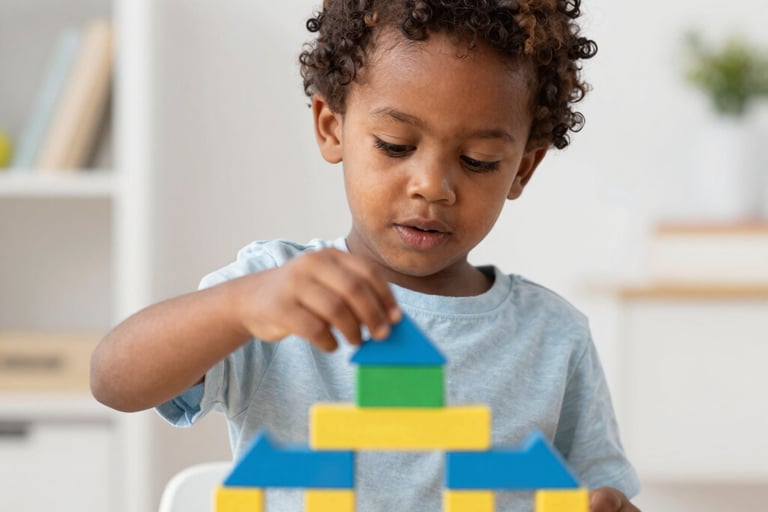
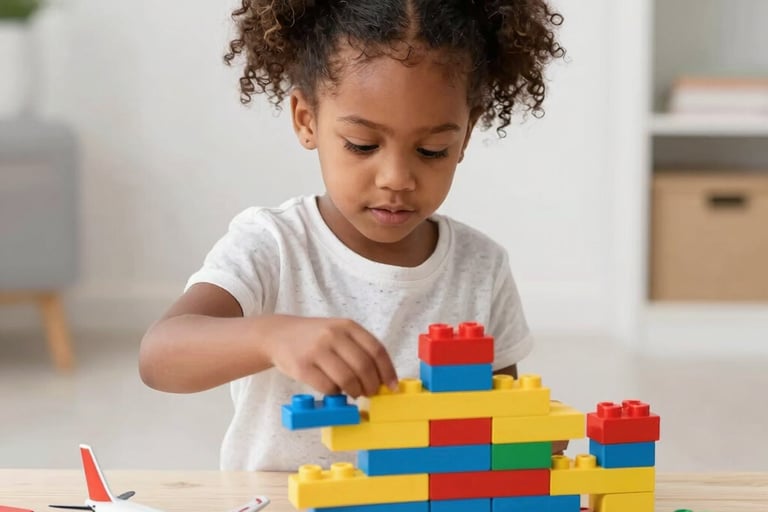
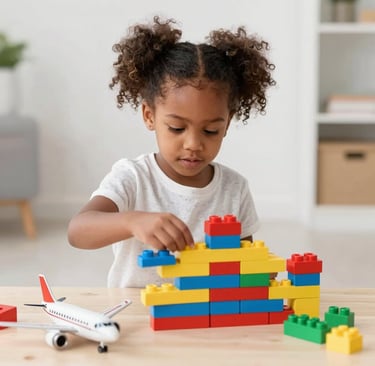
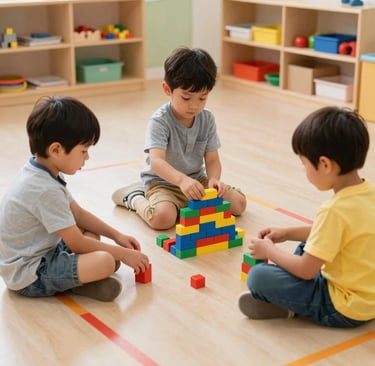
3-Year-Olds: Focus on stacking (towers) and rowing (placing blocks side-by-side). They are learning about gravity and the physical limits of the materials.
4-Year-Olds: Begin creating enclosures (fences for animals) and bridges (two blocks with one across the top).
5-Year-Olds: Engage in complex building with symmetry, decorative patterns, and "dramatic play" integration (e.g., "This is the airport, and the planes land here").
Suggested Block Activities
Blueprint Challenge: Tape a simple shape (a square or a "T") onto the floor using masking tape. Challenge the children to build a structure that fits exactly inside the lines.
City Planning: Provide "roads" (black felt strips or painter's tape on the floor). Ask them to build "services" along the road, like a grocery store, a house, or a fire station.
Weight & Balance: Provide a simple plank and a cylinder to create a see-saw. Challenge them to see how many small blocks it takes to balance a large block on the other side.
Habitat Building: Introduce photos of different animal homes (nests, caves, hives). Have children try to replicate those structures using blocks.
Demolition Time: Dedicate a specific time for safe "demolition." Use a soft ball to knock down towers, focusing on the concepts of force and direction.
Supply list of other building materials:
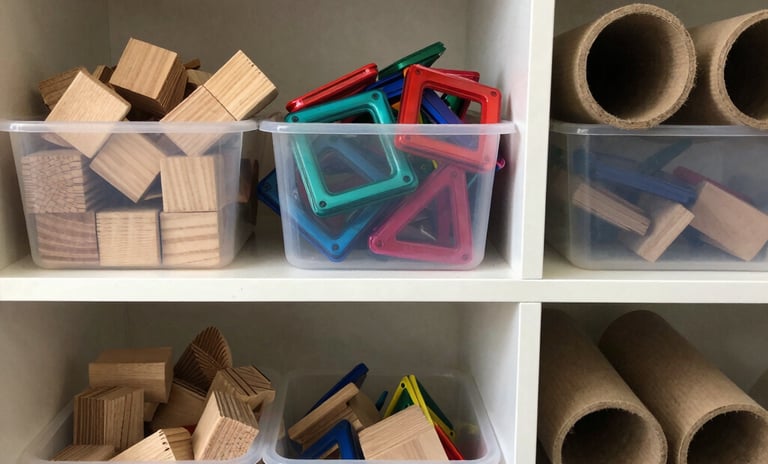
Cardboard "Brick" Blocks
Recycled Cardboard Tubes (Paper Towel/Mailing)
Small Traffic Signs & Cones
Tree Cookies (Cross-sections of wood) sanded to prevent slivers
PVC Pipe Connectors
Short sections of PVC pipe (Schedule 40 is preferred)Steering Wheels or Old Keyboards
Small props (figurines, toy cars, etc)
River Stones or Large Pebbles
Fabric Scraps (for "grass" or "water")
Rulers
Flashlights (for shadow play)
Ramps or construction elements
Organizational & Teaching Tips
Use "Shadow" Labels
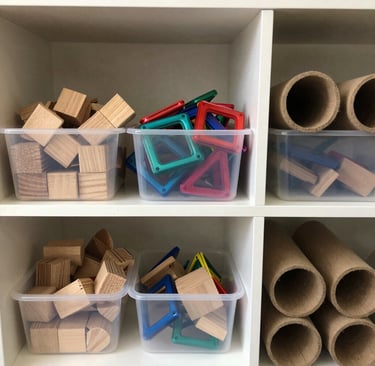
Trace the shape of your blocks onto the shelf or use printed photos of each block type. This turns cleanup into a matching and sorting game, reinforcing geometry and spatial awareness.
Define the Boundary
Use a low-pile rug or tape off a specific area. This prevents "construction creep" into walkways and protects the builders' hard work from being accidentally stepped on.
Take pictures and create a "Building Book"
Since block structures must eventually be put away, take photos of their "Masterpieces." Print them out and put them in a "Building Book" near the center so children can look back at their designs for future inspiration.
Helpful Vocabulary to Model
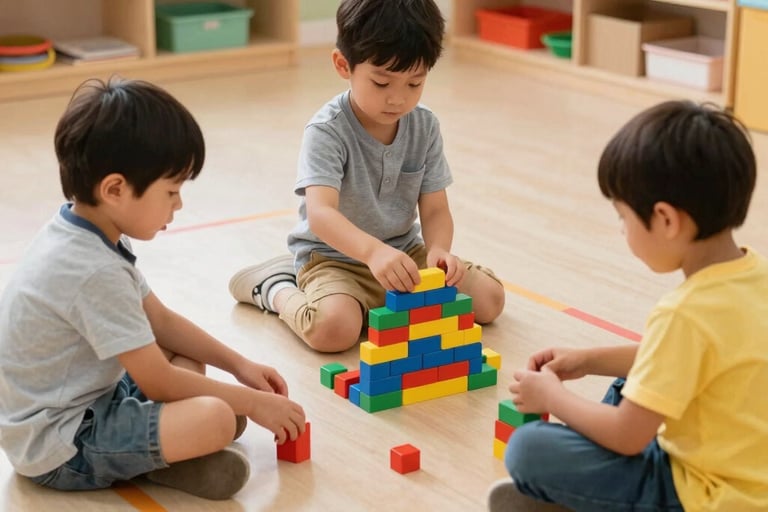
While they play, use "architectural" language to expand their vocabulary:
"I see you built a very stable base for that tower."
"That bridge is symmetrical; it looks the same on both sides."
"How many more blocks do you think will fit in that enclosure?"
Questions? Comments? Concerns?
info@joyfulletters.com
Affiliate Disclosure: Some of the links on this page are affiliate links. As an Amazon Influencer, a Walmart Partner, and an affiliate for select educational brands, I earn a small commission from qualifying purchases. This never raises the price for you. I only recommend items that add true value to a play-based learning environment. Thank you so much for supporting our page!
© Joyful Letters 2025-2026 ALL RIGHTS RESERVED. Permission is given to reproduce for individual classroom use. Our content material is not to be resold.