Grown-Up Goals. Kid-Sized Joy. Learning in disguise.
Castle Building
The Kingdom of Imagination
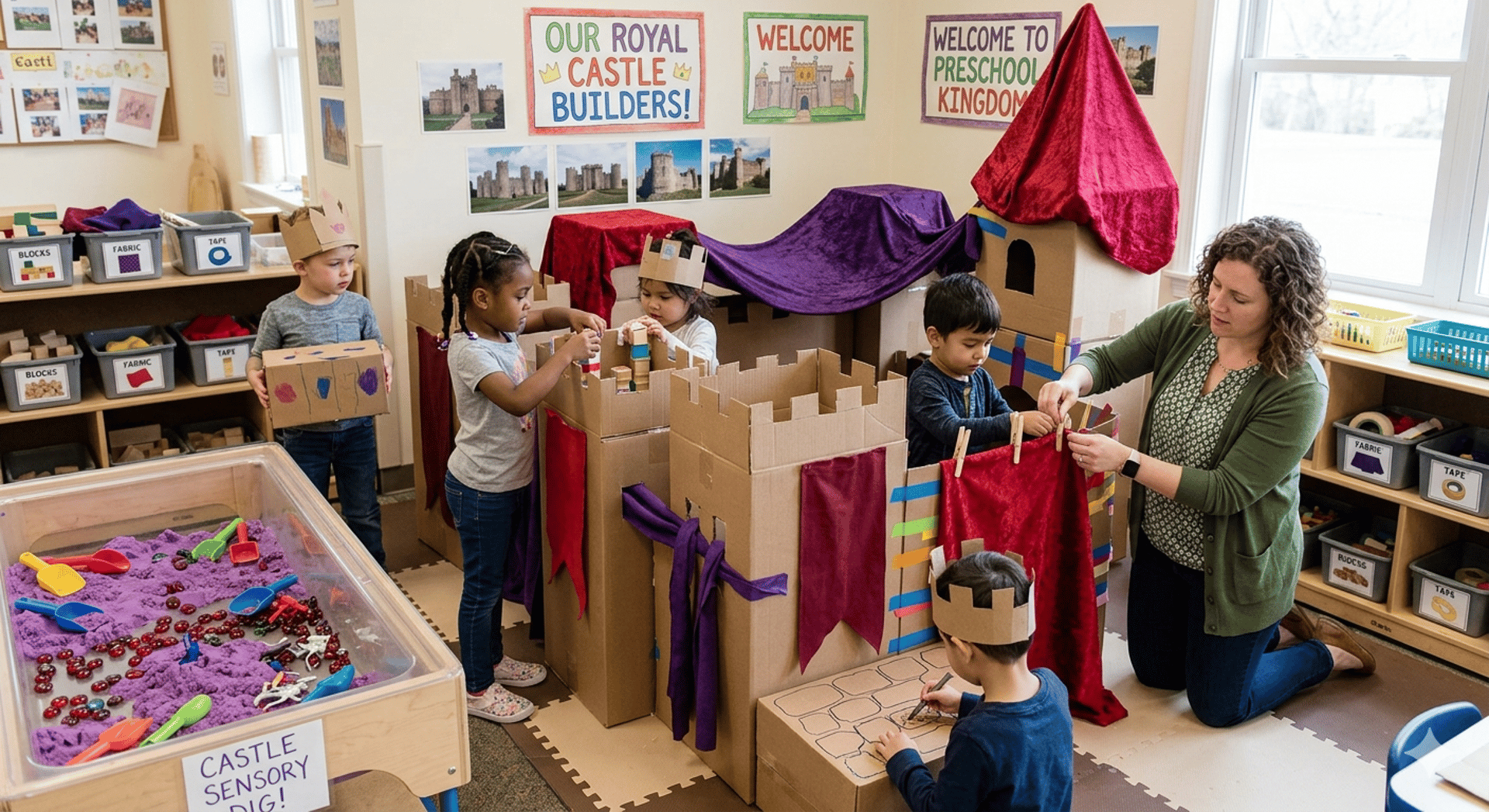
Suggested Items: Blocks, blankets, crowns, toy knights, carboard, red or purple draping fabric, clothespins, tape, gray paint, silk scarves or flags, Medieval Feast Foods, gray foam blocks,
A Castle Play Center (or Medieval Kingdom Center) is a high-interest theme that bridges the gap between fantasy and history. It provides a rich environment for vocabulary development—using words like drawbridge, turret, moat, and armor—while encouraging complex social roles.
The "Stone & Mortar" Construction Zone
The Setup: Provide large cardboard boxes painted with a "stone" pattern. Include "props" like silk scarves for flags and silver duct tape for building and for repairs.
The Activity: Children work together to build a fortress. Challenge them to design a "gate" that can open and close.
The Engineering: This focuses on stability and scale. Children learn how to stack blocks to create height without the walls toppling over.
The "Royal Banquet & Kitchen"
The Setup: A long table covered in a (purple, cobblestone, or red) cloth. Use tape to secure the tablecloth. Provide gold-colored plastic plates, goblets, and "medieval" play food items.
The Activity: Children practice the etiquette of a royal feast. They can take turns being the "Chef," the "Royal Guest," or the "Town Crier" announcing the meal.
The Social Skills: This builds turn-taking and formal language (e.g., "Would you care for more juice, Sir Knight?").
The "Heraldry & Shield" Art Studio
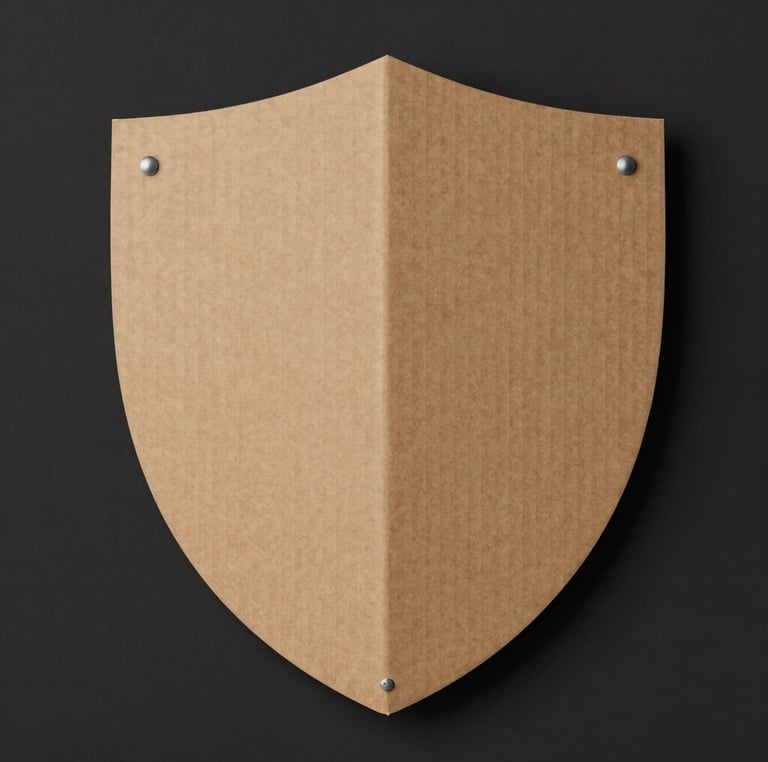
The Setup: Pre-cut shield shapes made from heavy cardboard. Every kingdom needs its defenders! Set up a crafting station next to the main build. Children can cut out simple "shield" shapes from the cardboard and "decorate" them by gluing on fabric and buttons. Use the remaining fabric as sashes or to line their cardboard "crowns." Magazine pictures, markers, crayons, or stickers could also be used to decorate the shield.
The Activity: Children design their own "Coat of Arms." Explain that in a castle, your shield told people who you were.
The Literacy/Identity: This helps children explore symbolism—the idea that a picture (like a lion) can represent a feeling (like bravery).
Crown Making
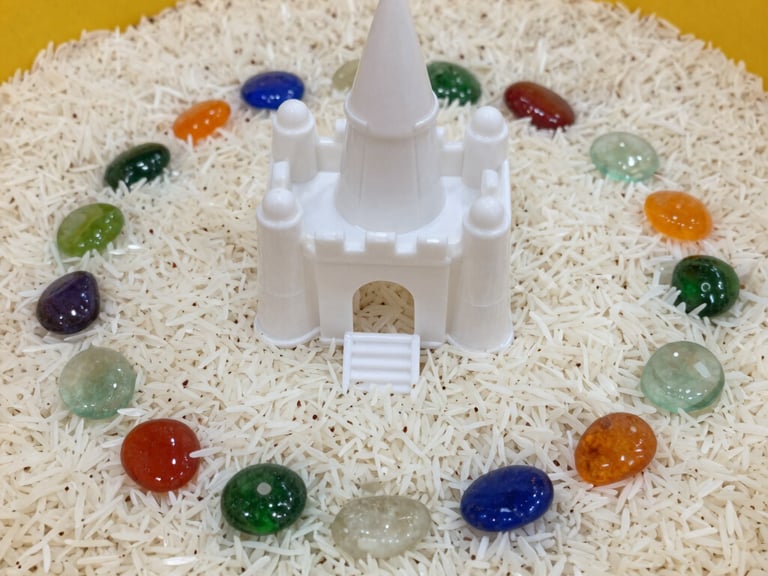
Ideas for the "Moat & Drawbridge" Sensory Table
The Setup: Fill a sensory bin with water (the moat) and blue glass gems. Place a "castle" (a plastic toy or an inverted yogurt container) in the center. Provide craft sticks and string.
The Activity: Children must build a bridge that reaches from the "land" to the "castle" without falling into the water.
The Physics: This introduces simple machines and balance.
The Castle Sensory Bin
The Filler: Use dyed sand or rice (dyed purple with red food coloring) or kinetic sand.
The "Treasures": Hide large glass gems (like the ones from your Fairy Garden wishing well), small plastic knights, and "dragon eggs" (painted stones).
The Goal: Have children use large plastic scoops and measuring cups to "dig for royal treasure" to place inside their newly built castle. Or children can build castles with castle themed sand toys.


Teacher’s "Nudge" Questions:
"The dragon is coming to visit! How can we make the castle walls stronger to keep everyone safe?"
"I see your shield has a bright yellow sun on it. I wonder what that says about the person holding it?"
"The drawbridge is stuck! What tools do we need to pull it back up?"
The "Kingdom" Checklist:
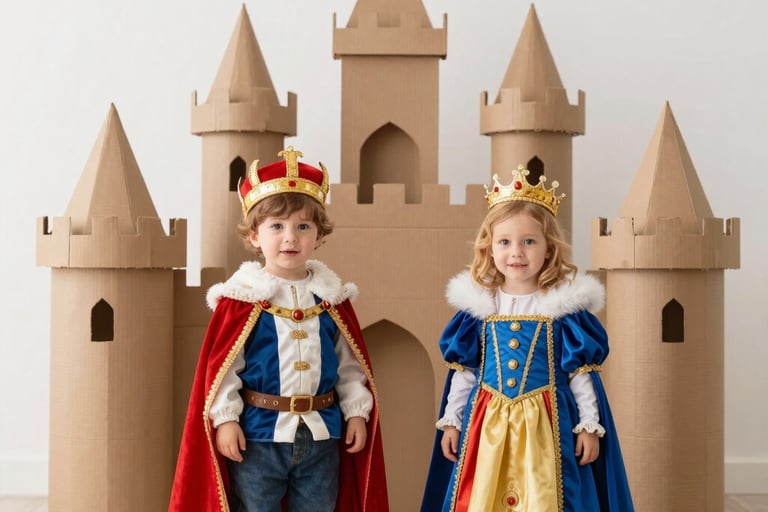
The Royal Wardrobe: Include "tunic" style shirts (easy to put on over clothes), capes with Velcro closures, and soft "crowns" made of felt.
The Map Room: Provide a piece of "parchment" (brown paper bags crinkled up) and have children draw a map of their kingdom, including where the forest, the castle, and the dragon’s cave are.
Inclusive Roles: Ensure there are roles beyond "Prince" and "Princess." Include Blacksmiths, Architects, Musicians, and Knights to give every child a way to connect to the theme.
Adding "Soft Walls" (The Fabric Drape)
Materials: Cardboard walls, red and purple colored fabrics, clothespins, tape.
Activity: Now that they have a structure, show them how to create "privacy curtains" or "colorful banners." They can drape the fabrics over the boxes and use clothespins or tape to secure them, much like the children are doing in the classroom photo. The fabric adds a sensory softness and transforms the look instantly.
The Windows
Materials: Cardboard boxes, pre-cut cardboard triangles or square outlines (template), markers, teacher with safety scissors.
Activity: (Scaffolded activity for 4–5 year olds) Have the children decide where they want "battlements" on their towers. They use the template to draw the outline. Then, they call the teacher over, who uses safety scissors to cut out the windows. The child can then "finish" the window with a marker or by taping some sheer purple fabric over it.
Integrating Math & Literacy
Counting Walls: "I see you have a two-story castle. Let's count how many boxes you needed to build the first floor."
"Blueprint" Drawing: Encourage children to draw their castle idea on a dry-erase board before they start building.
Storytelling: Invite children to act out a story in their castle using the crowns and shields they created.
Get in touch
Questions? Comments? Concerns?
info@joyfulletters.com
Affiliate Disclosure: Some of the links on this page are affiliate links. As an Amazon Associate, a Walmart Partner, and an affiliate for select educational brands, I earn a small commission from qualifying purchases. This never raises the price for you. I only recommend items that add true value to a play-based learning environment. Thank you so much for supporting our page!
© Joyful Letters 2025-2026 ALL RIGHTS RESERVED. Permission is given to reproduce for individual classroom use. Our content material is not to be resold.
Follow us on Facebook