Grown-Up Goals. Kid-Sized Joy. Learning in disguise.
Counting Corner
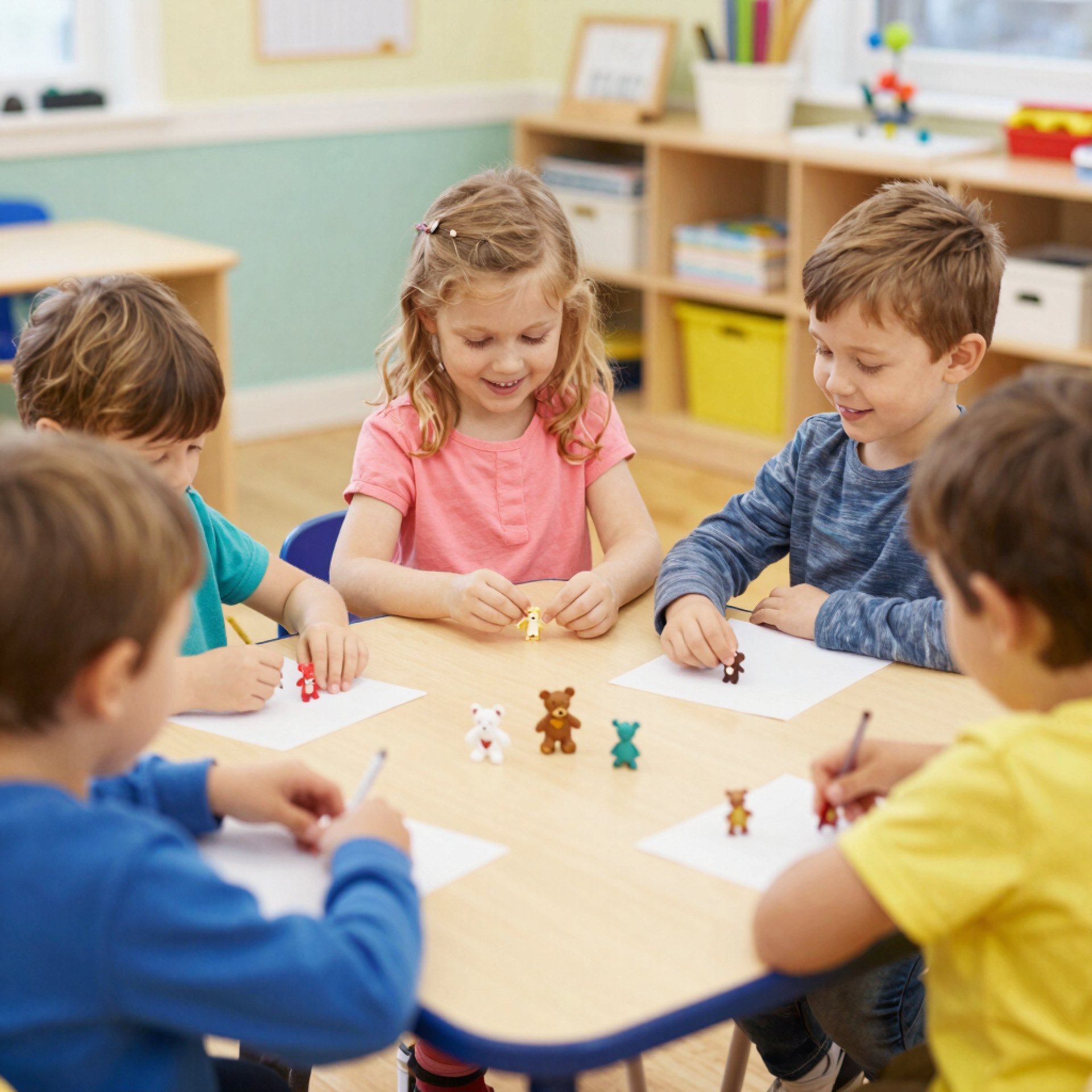
Suggested Items: Counting bears, number blocks, manipulatives, number puzzles, math link cubes, number stamps, number links,
Counting Corner for Preschoolers - Use colorful decorations and visuals that emphasize numbers and counting.
For children ages 3 to 5, counting is most effective when it moves from rote counting (saying numbers in order) to one-to-one correspondence (understanding that one touch equals one number) and cardinality (knowing the last number counted represents the total).
Hands-On Counting Activities
The "Parking Lot" Game: Draw numbered parking spaces on a piece of cardboard. Ask children to "park" the correct number of toy cars in each spot, matching the numeral to the quantity.
Nature Scavenger Hunt: Give children a small egg carton with numbers written in the bottom of each cup. Have them go outside to find "3 small stones," "1 yellow leaf," or "5 twigs" to fill the spots.
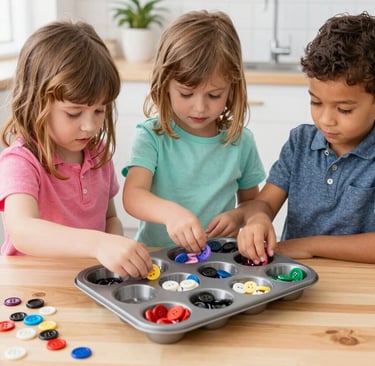
Button Sorting & Stringing: Provide large colorful buttons and pipe cleaners. Ask them to sort buttons by color, and thread a specific number of buttons onto each pipe cleaner, which also builds fine motor strength.
Muffin Tin Toss: Number the bottom of a muffin tin with a number on a sticker. Have children toss a pom-pom or beanbag into a hole and then count out that many items (like plastic bears or blocks) into the cup.
Dice Movement: Roll a large plush die. Whatever number it lands on, the children must perform that many actions (e.g., "5 giant leaps," "3 claps," or "6 spins").

Real-Life Connections:
Discuss how counting is used in everyday life (e.g., counting toys, counting steps, counting snacks).
Have children count objects in their environment.
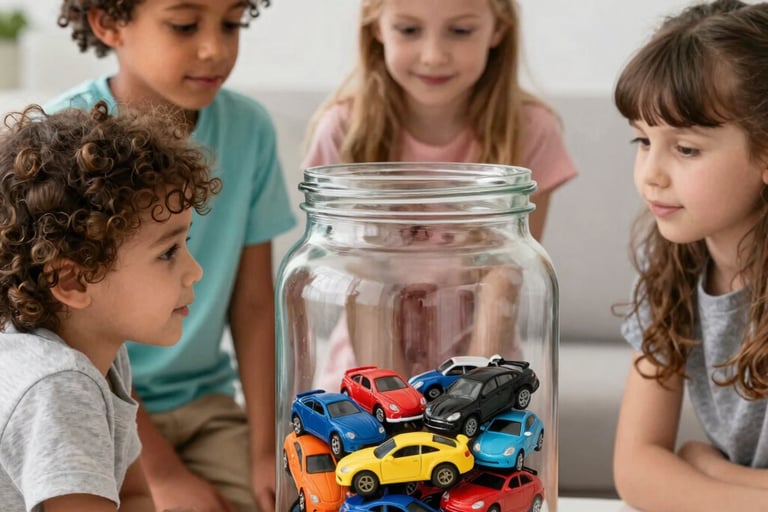
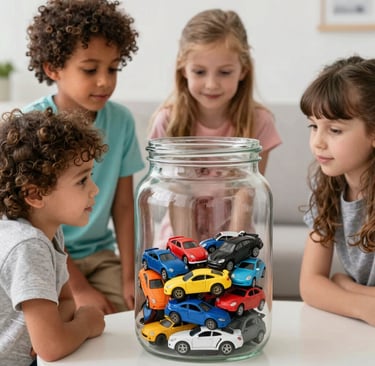
Create a "counting jar".
Have a jar with various objects, and have the children guess how many are in the jar.
Create a "counting game" box.
Have a box with various counting games that the children can use at the counting corner.
Sensory Counting Bins:
Create sensory bins with different textures and materials for counting (e.g., rice with hidden number counters, sand with number molds).
Incorporate different senses into counting activities.
Counting with Natural Materials:
Use natural materials (pinecones, rocks, leaves) to create counting patterns and sets.
Explore how different natural materials can be used for counting.
These suggested books use physical features like die-cut shapes, peek-through cutouts, and tracing tracks to keep high-energy preschoolers engaged while practicing their numbers.
An award-winning, chunky book that uses thick pages cut into the shape of each numeral, creating a peek-through guessing game. It introduces numbers from 1 to 100 with clever before-and-after transformations (like one acorn becoming one oak tree).
An interactive trace-and-flip board book designed for numbers 1 through 20. It features grooved tracks for finger-tracing to build muscle memory for number formation alongside counting flaps.
Fish Eyes: A Book You Can Count On
A classic by Lois Ehlert featuring a deep-sea adventure with brilliantly colored fish and interactive die-cut pages. It introduces basic addition concepts along with visual counting clues.
Narrative & Story-Based Counting Books
These books rely on engaging storylines, rhythmic text, and classic characters to help children follow a narrative arc while tracking numbers sequentially.
A timeless Little Golden Book favorite featuring rhythmic verse and nostalgic animal illustrations by Garth Williams. It provides a simple, structured format for learning numbers 1 through 10.
A clever bedtime countdown story that flips the classic "Five Little Monkeys" concept. It features ten sneaky characters who change personas (from ninjas to astronauts and cowboys) as they avoid going to sleep.
A beautifully illustrated lift-the-flap book that pairs hidden object searches with number recognition from 1 to 20, fostering descriptive language skills alongside early math.


"Counting Scavenger Hunts":
Hide number cards or objects around the center and have children find them using clues.
Use magnifying glasses to examine the numbers closely.
"Counting Story Creation" Workshops:
Have children create counting stories using puppets, props, or drawings.
Encourage them to incorporate numbers and counting into their narratives.
"Counting Movement" Activities:
Create movement activities that incorporate counting (e.g., "Jump 5 times," "Clap 3 times").
Use music and rhythm to enhance the activities.
"Counting Pattern Exploration":
Focus on creating and identifying number patterns (e.g., 1, 2, 1, 2 or 2, 4, 6).
Use manipulatives or drawings to create patterns.
Collaborative Counting Projects:
Have children work together to create large-scale counting projects, like a classroom number line or a counting mural.
Encourage them to plan, design, and build their projects collaboratively.


Counting Apps and Websites:
Use apps and websites that feature interactive counting games, number puzzles, and counting animations.
Digital Number Creation:
Use tablets or computers to create digital number representations or counting patterns.
Interactive Whiteboard Counting Games:
Use interactive whiteboards to play counting games and display number-related images and videos.
Projector with Counting Animations:
Project animated counting stories or number-related visuals onto a wall or screen to inspire children.


Create a "counting store" area.
Have play money, and items available for the children to buy and sell.
Use an index card to show the price of each object with its cost in dollars.
Instead of just writing "$3," you can draw or glue three small pictures of one-dollar bills or three circles (representing coins) next to the item. This allows children who aren't yet reading numbers to "count" the price themselves!


Classic Counting Songs
These songs focus on counting down (subtraction) and counting up (addition), which are foundational math skills.
"Five Little Monkeys Jumping on the Bed": * The Skill: Counting down from 5 to 0.
Movement: Hold up five fingers and "jump" them on your palm. Use a "telephone" hand gesture for the doctor.
"The Ants Go Marching": * The Skill: Counting up to 10 and understanding rhythm.
Movement: March in place, increasing the number of fingers shown for each verse.
"Five Little Ducks Went Out One Day": * The Skill: Subtraction and "one-to-one" representation.
Movement: Use one hand as the "Mother Duck" (quacking) and the other hand’s fingers as the ducklings that disappear.
"One, Two, Buckle My Shoe": * The Skill: Number recognition and rhyming pairs.
Movement: Mimic the actions—buckling a shoe, knocking on a door, and picking up sticks.


Questions? Comments? Concerns?
info@joyfulletters.com
Affiliate Disclosure: Some of the links on this page are affiliate links. As an Amazon Influencer, a Walmart Partner, and an affiliate for select educational brands, I earn a small commission from qualifying purchases. This never raises the price for you. I only recommend items that add true value to a play-based learning environment. Thank you so much for supporting our page!
© Joyful Letters 2025-2026 ALL RIGHTS RESERVED. Permission is given to reproduce for individual classroom use. Our content material is not to be resold.