Grown-Up Goals. Kid-Sized Joy. Learning in disguise.
Shape Exploration Center
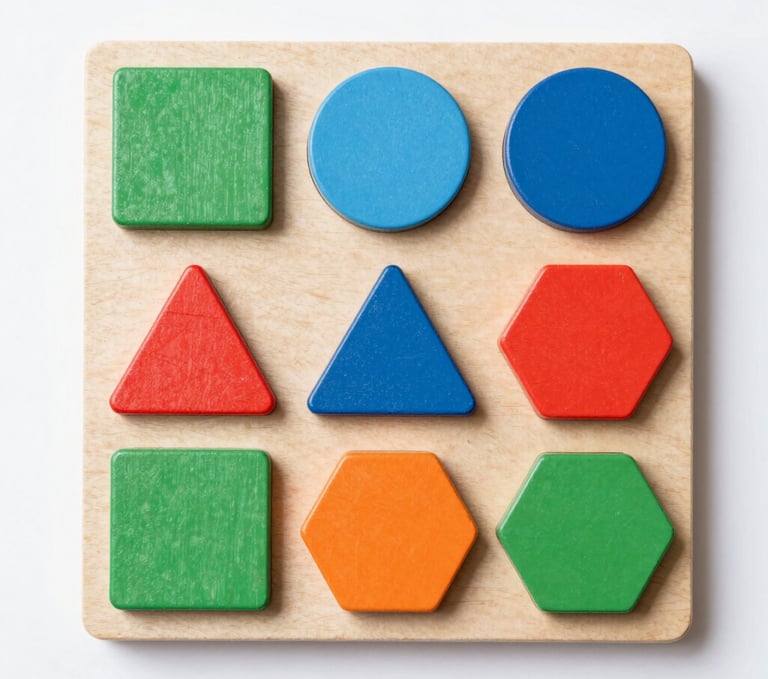
Suggested Items: Shape blocks, shape sorters, shape puzzles, shape templates.
A shape center helps children understand more about shapes and spatial reasoning!
Use shape-themed decorations and visuals.
Material Preparation and Arrangement:
Shape Blocks:
Provide a variety of shape blocks (wooden, plastic, foam) in different sizes and colors.
Have them readily available in bins or containers.
Shape Sorters:
Provide shape sorters with different shapes and corresponding slots.
Arrange them on shelves or in a designated area.
Provide shape puzzles with various shapes and configurations.
Arrange puzzles on shelves or in puzzle racks for easy access for the children.
Shape Templates:
Provide shape templates (plastic or cardboard) in different sizes.
Have them readily available in bins or on a table.
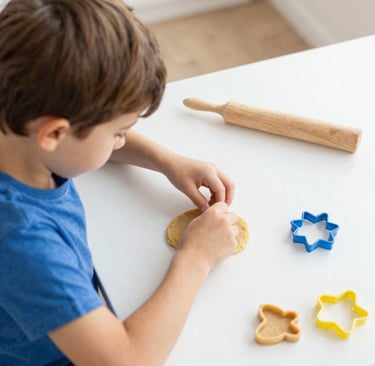
Themed Shape Centers:
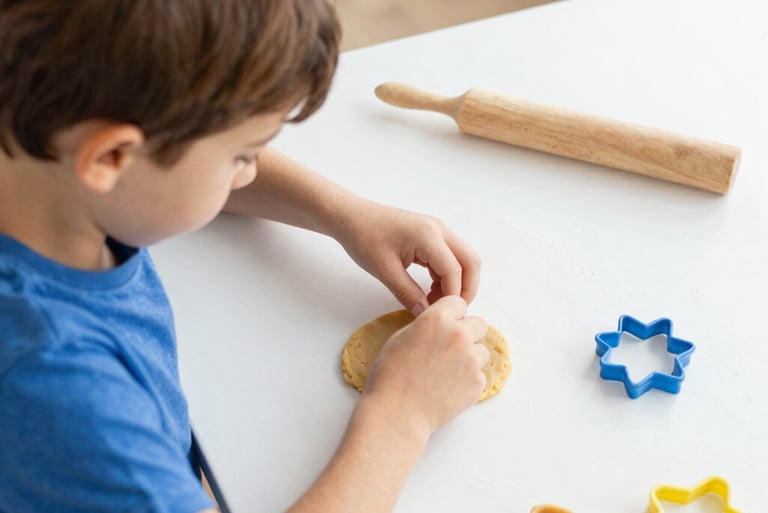
Create themed shape centers (e.g., things to make with shapes: animals, cars, houses, cities, forests, etc.)
Shape Story Time:
Read shape books aloud to children.
Shape Art Projects:
Have children create artwork using shapes (e.g., shape collages, shape paintings).
Use different art techniques to make the shapes visually appealing.
Real-Life Connections:
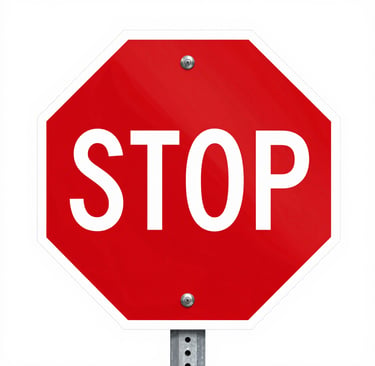
Discuss how shapes are used in everyday life (e.g., signs, buildings, objects).
Have children identify shapes in their environment.
Create a "shape building challenge" area.
Have various building materials, and challenge cards available.
Create a "shape discovery" box.
Have a box with various objects, and have the children identify the shapes of the objects.

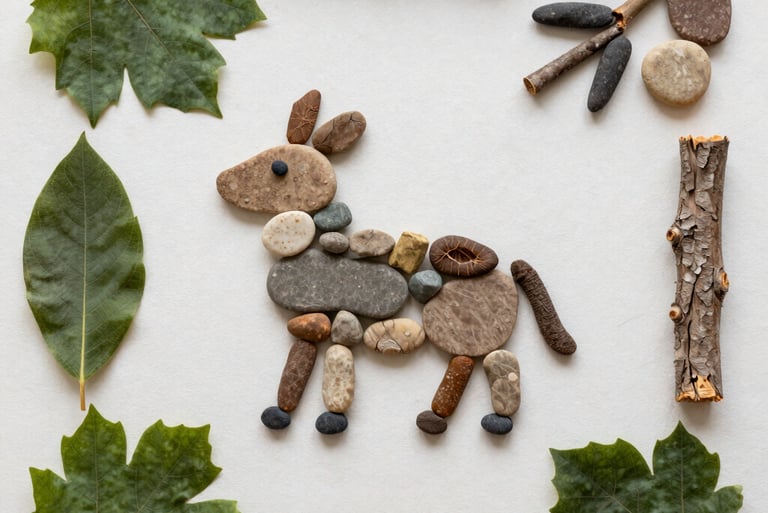
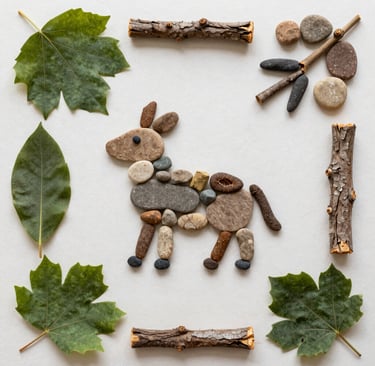
Shape Exploration with Natural Materials:
Use natural materials (leaves, sticks, stones) to create shape patterns and designs.
"Shape Detective" Games:
Hide shape cards or objects around the center and have children find them using clues.
Use magnifying glasses to examine the shapes closely.
"Shape Movement" Activities:
Use music and rhythm to enhance the activities.
Create movement activities that incorporate shapes (e.g., "Walk in a circle," "Make a square with your arms").
Shape Building:
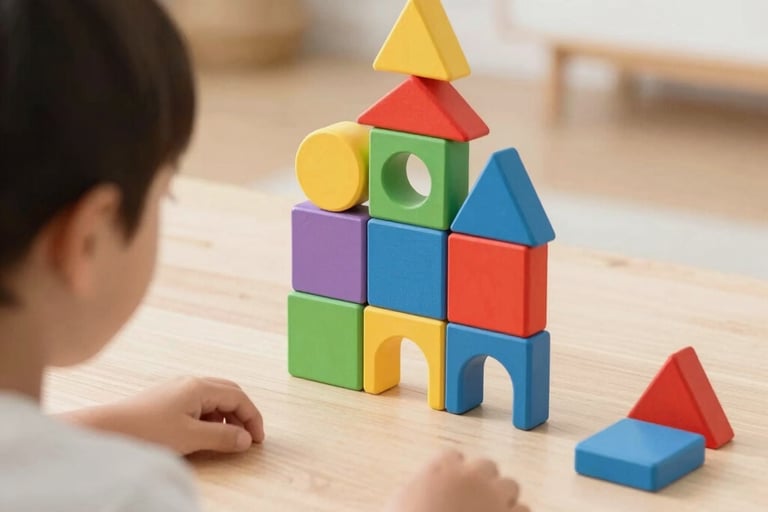
Have children build structures and designs using shape blocks.
Encourage them to name the shapes they use.
Create a "shape construction" zone.
Have various building materials, and challenge cards available for the children to build structures using shapes.
"Shape Building Challenges":
Challenge the children to build specific objects using only certain shapes.
Collaborative Shape Projects:
Have children work together to create large-scale shape projects, like a classroom shape mural or a shape-themed play.
Encourage them to plan, design, and build their projects collaboratively.
Shape Mirror Activities:
Have the children use mirrors to explore symmetry.
"Shape Pattern Exploration":
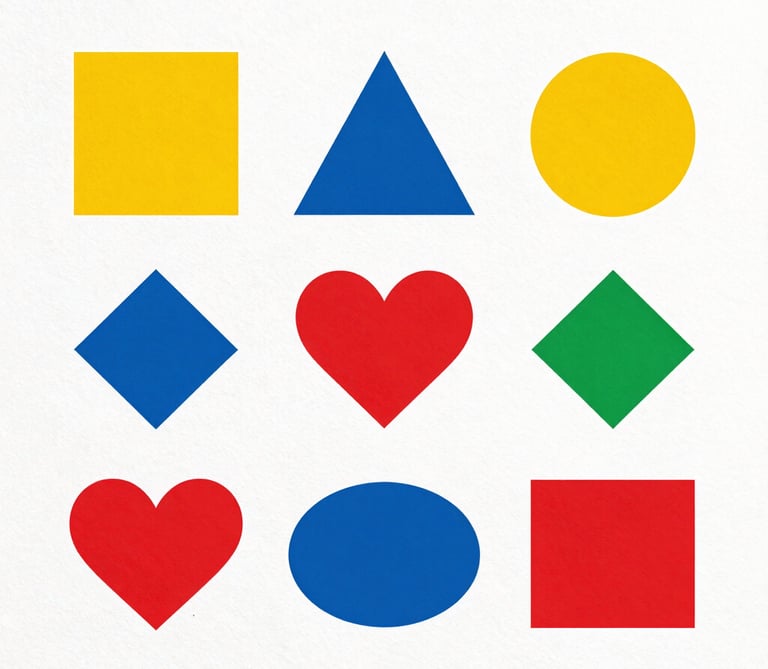
Focus on creating and identifying shape patterns (e.g., circle, square, circle, square or triangle, square, circle).
Use manipulatives or drawings to create patterns.
"Shape Scavenger Hunts":
Hide shape objects around the classroom and have the children find them using clues or maps.
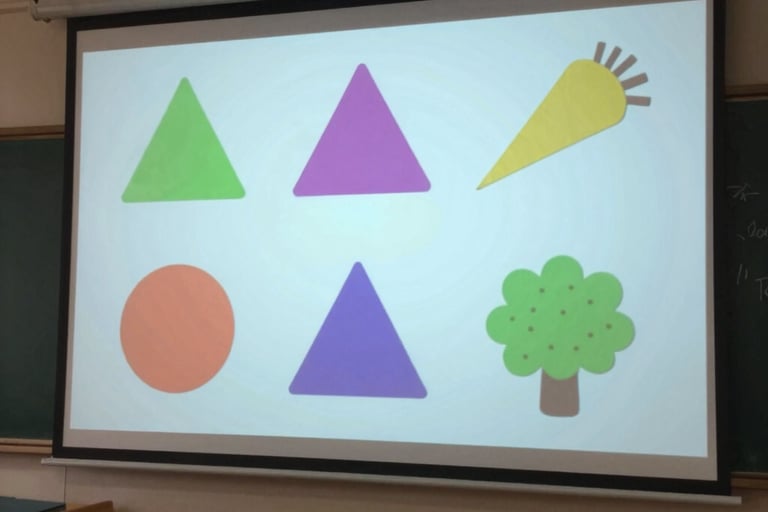
"Shape Pattern Exploration":
Focus on creating and identifying shape patterns (e.g., circle, square, circle, square or triangle, square, circle).
Use manipulatives or drawings to create patterns.
Have children manipulate shapes to create different shadow patterns.
"Shape Scavenger Hunts":
Hide shape objects around the classroom and have the children find them using clues or maps.
Questions? Comments? Concerns?
info@joyfulletters.com
Affiliate Disclosure: Some of the links on this page are affiliate links. As an Amazon Influencer, a Walmart Partner, and an affiliate for select educational brands, I earn a small commission from qualifying purchases. This never raises the price for you. I only recommend items that add true value to a play-based learning environment. Thank you so much for supporting our page!
© Joyful Letters 2025-2026 ALL RIGHTS RESERVED. Permission is given to reproduce for individual classroom use. Our content material is not to be resold.