Grown-Up Goals. Kid-Sized Joy. Learning in disguise.
Preschool Cowboy Center
Objective: Preschool children will explore the world of cowboys through imaginative play, creative activities, and hands-on learning experiences.
Center Setup:
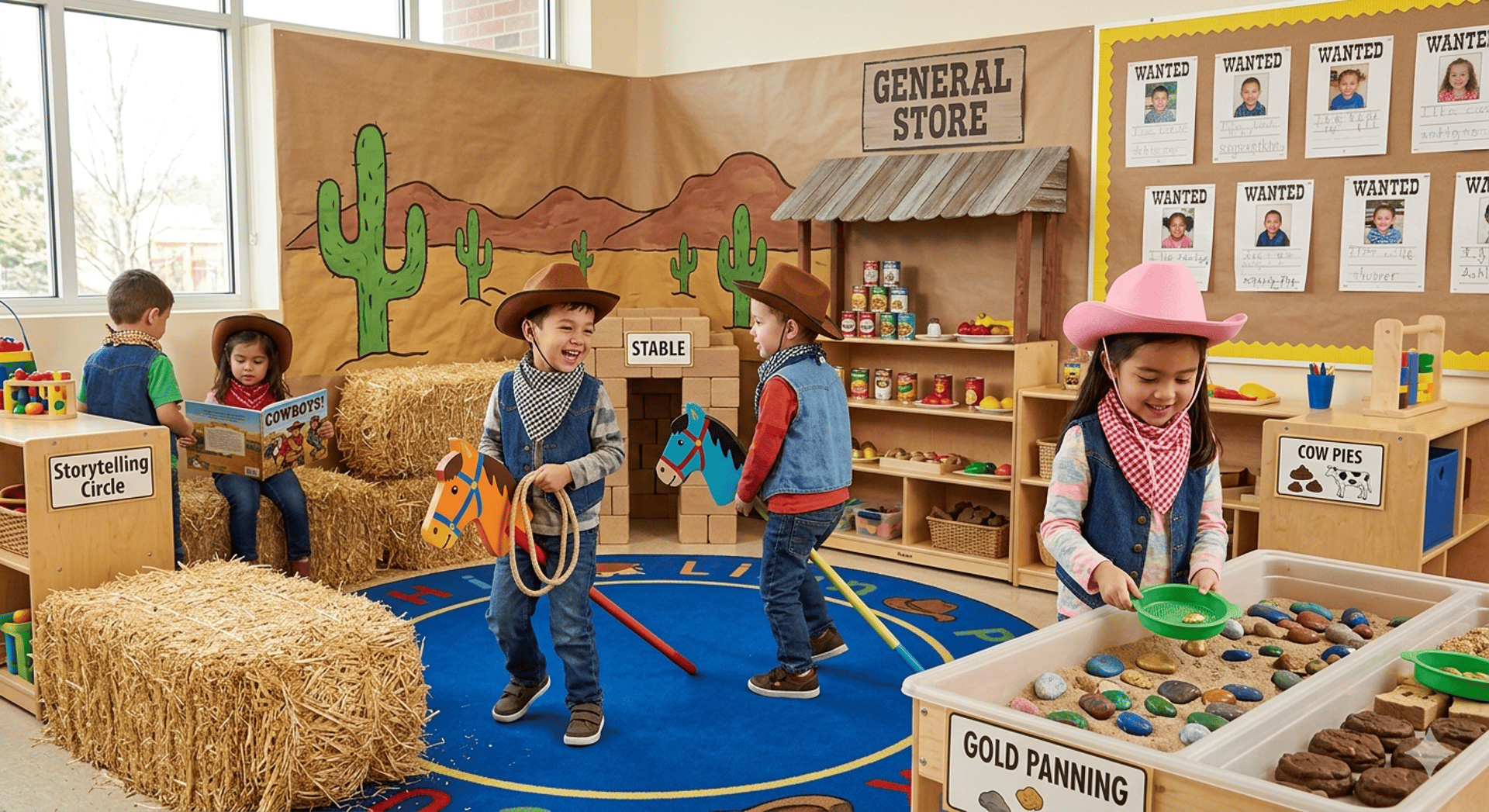
Create a "Wild West" area with a backdrop (e.g., brown paper with cactus drawings), hay bales (if available), and a "general store" corner. Focus on sensory exploration, dramatic play, and simple storytelling.
Use authentic-looking materials: burlap sacks, weathered wood, tin cans, and natural fabrics.
Incorporate visual aids: maps of the American West, pictures of historical cowboys, and illustrations of cowboy tools and equipment.
Replica cowboy tools: lariats (soft rope), canteens, tin cups, and cooking utensils.
Trading post items: beads, feathers, faux furs, and simple tools for "trading."
Authentic-looking clothing: denim vests, leather chaps (simplified), and bandanas in various patterns.
Younger Children: Focus on simple activities like dramatic play and sensory exploration.
Older Children: Encourage more complex role-playing, storytelling, and creative projects.
Materials:
Cowboy hats, vests, bandanas
Toy horses or stick horses
Ropes (soft, safe material) (these require extra supervision to avoid the danger of strangulation)
Toy lassoes (hoop and rope) (these require extra supervision to avoid the danger of strangulation)
"Gold nuggets" (painted rocks or plastic coins)
"Wanted" posters (blank or with simple drawings)
Art supplies (paper, crayons, paint)
Blocks (for building a "saloon" or "stable")
Play dough (for making "cow pies" or "horseshoes")
Books about cowboys and the Wild West
Music (country or western)
Activities:
Dramatic Play (General Store/Stable):
Role-Playing: Children can pretend to be cowboys, cowgirls, saloon keepers, or store owners.
Building: Use blocks to construct a saloon, stable, or fort
"Shopping": Set up a general store with play food and other items for children to "buy" and "sell."
Chuckwagon Cooking:
Set up a pretend chuckwagon with tin plates, cups, and cooking utensils.
Discuss the types of food cowboys ate (beans, biscuits, jerky).
Engage in pretend cooking and serving "meals."
Cowboy Camp:
Create a campfire area (using battery-operated lights or fabric).
Discuss the daily life of a cowboy, including sleeping under the stars and tending to horses.
Practice setting up a simple "camp" with blankets and pillows.
Trading Post:
Introduce the concept of bartering and trading.
Discuss the interactions between cowboys and Native American tribes.
Engage in pretend trading activities, using beads, feathers, and other items.
Pony Express:
Add a small wooden/cardboard box labeled "Pony Express."
Provide some paper and crayons so the children can "write" letters to other ranches or to their families and "mail" them.
Storytelling Circle:
Create a designated area for storytelling, using blankets and pillows.
Share stories about cowboy legends, Native American folklore, and historical events.
Encourage children to create and share their own stories.
Introduce sign language that cowboys would have used.
Cowboy Skills (Roping/Riding):
Roping: Children can practice "roping" toy horses or stuffed animals with a toy lasso.
Use soft ropes and targets to practice lassoing skills.
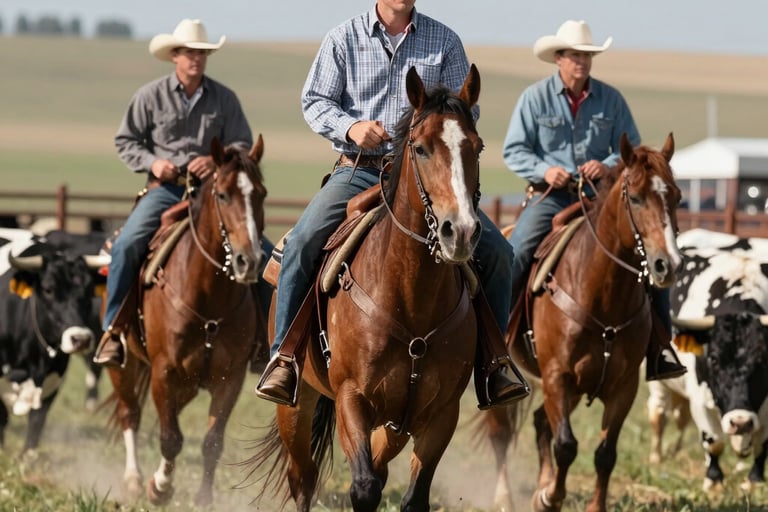
Discuss the importance of roping in cattle herding.
Riding: Use stick horses or toy horses for imaginative "riding" adventures.
Rodeo Games: Set up simple rodeo games like "barrel racing" (around cones) or "bull riding" (on a rocking horse).
Extensions:
Plan a "cowboy day" with cowboy-themed snacks and activities.
Invite a guest speaker (e.g., a rodeo performer or a historian) to visit the classroom.
Take a field trip to a local farm or ranch.
Create a cowboy-themed bulletin board with children's artwork and stories.
Historical Art:
Create artwork depicting scenes from cowboy life, such as cattle drives and campfires.
Use natural materials, such as clay and pigments, to create artwork.
Problem-Solving Scenarios:
Present children with scenarios that cowboys might have faced, such as a lost herd or a broken wagon wheel.
Encourage children to work together to find solutions.
Literacy: Create and tell stories about cowboy adventures, create "wanted" posters with detailed descriptions, and read historical accounts.
Take a virtual field trip to a historical site or museum related to the American West.
Dramatic Play Thematic Center: The Golden Star Ranch
Essential Large Furniture & Props
The "Stable": Use large cardboard boxes or a wooden play frame draped with brown felt to create stalls for "horses."
The Campfire: A collection of smooth rocks surrounding "flames" made from red, orange, and yellow felt or tissue paper.
Hay Bales: Rectangular boxes wrapped in tan butcher paper or yellow raffia.
General Store Counter: A small table or shelving unit for "selling" supplies.
Wearable Costumes & Accessories
Vests: Brown felt or denim vests (easy for kids to pull on over their clothes).
Hats: A variety of straw or felt cowboy hats.
Bandanas: Various colors for neckwear (ensure they are loosely tied for safety).
Boots: Old rain boots or dress-up cowboy boots.
Badges: Silver star "Sheriff" stickers or felt badges.
Tools for "Working" the Ranch
Lassoes: Soft cotton ropes or even hula hoops (safe and easy to handle).
Grooming Kit: Soft-bristled brushes and combs for the "horses."
Feed Buckets: Small plastic pails filled with yellow yarn ("hay") or felt "carrots."
Pony Sticks: Hobby horses or pool noodles with felt horse heads attached.
Campfire Cookware: Tin plates, metal camping mugs, and a small cast-iron (or plastic) skillet.
Literacy & Math Integration
General Store Signage: Labels for "Hay," "Oats," and "Water." (Laminate signs for future use.)
Price Tags & Play Money: For buying and selling supplies at the store.
Open/Closed Sign: To help kids manage the "hours" of the ranch.
Ranch Map: A simple hand-drawn map showing the stable, the campfire, and the trail.
Center Setup Tips
Design for Flow: Keep the "camp" area (quiet play) separate from the "riding trail" (active play) to avoid collisions.
The Transition: Introduce the center during circle time by reading one of the cowboy books mentioned earlier to spark their imagination on how to use the props.
Ranch Roles & Responsibilities
The Lead Wrangler (The Boss)
Task: Uses the "Ranch Map" to decide where the herd should go next.
Skill: Leadership and planning.
The Animal Caretaker
Task: Feeds the hobby horses "oats" and "hay" from the buckets and uses the soft brushes to groom them.
Skill: Empathy and fine motor coordination.
The Trail Scout
Task: Uses a pair of "binoculars" (or make some out of cardboard tubes) to look for "lost cattle" or "water holes" around the classroom.
Skill: Observation and imaginative movement.
The Camp Cook
Task: Stirs the "stew" in the skillet over the felt campfire and serves tin plates of food to the tired cowboys.
Skill: Sequencing and social sharing.
The Town Sheriff
Task: Makes sure everyone is following the "Ranch Rules" (like "No running in the stable") and helps solve any "disputes" over the lassoes.
Skill: Social-emotional regulation and rule-following.
The General Store Clerk
Task: Sorts the play money, stocks the "supplies" on the shelves, and helps customers "buy" what they need for their journey.
Skill: Sorting, counting, and one-to-one correspondence.
Snacks:
Day 1: "Trail Mix" Bar
Allow the children to "pack their bags" for the trail by choosing their own ingredients.
Ingredients: Toasted oat cereal (Cheerios), pretzel sticks ("twigs"), gold-colored crackers, and dried cranberries or raisins.
Presentation: Set the ingredients out in small bowls and let children scoop them into a small paper bag.
The Lesson: This is great for practicing scooping and pouring skills.
Day 2: "Cowboys in a Blanket"
A warm, hearty snack that feels like a campfire meal.
Ingredients: Mini turkey sausages or plant-based links wrapped in a small piece of crescent roll dough and baked until golden.
Presentation: Serve on a tin plate or a sturdy paper napkin to mimic a mess-hall meal.
The Lesson: Discuss the concept of temperature (careful, it’s hot!) and shapes (rectangles and triangles).
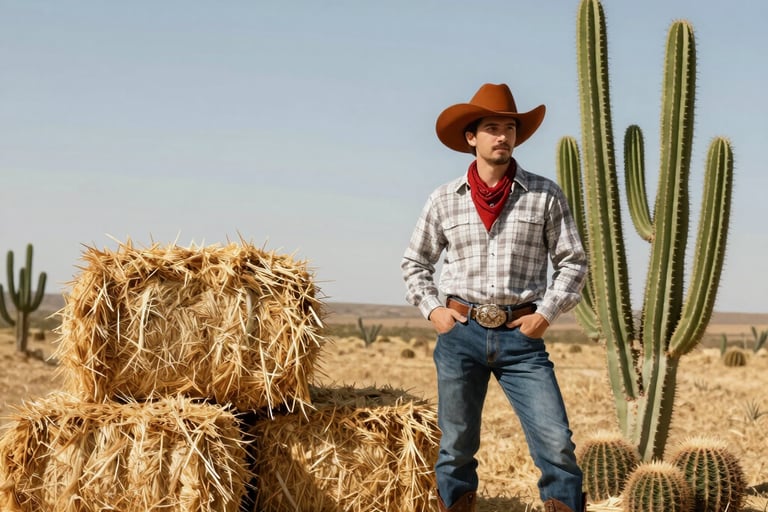
Day 3: "Cactus Fruit" & Hay Bales
A refreshing, fruit-forward snack.
Ingredients: Green grapes or kiwi slices (the "cactus") paired with small squares of shredded wheat cereal or graham crackers ("hay bales").
Presentation: Arrange the green fruit in a cluster on the plate with the "hay bales" stacked neatly to the side.
The Lesson: Focus on textures—the crunch of the cereal versus the juiciness of the fruit.
Day 4: "Campfire Parfaits"
A visually bright snack that mimics the colors of the campfire.
Ingredients: Clear plastic cups layered with orange segments (the "coals"), yellow pineapple tidbits (the "flames"), and a small dollop of yogurt or whipped cream (the "smoke").
Presentation: Give each child a spoon and encourage them to "stir the fire" before they eat.
The Lesson: This is a perfect opportunity for color identification and sequencing layers.
Frontier Hydration: "Canteen Water"
To stay hydrated on the trail, serve water or diluted apple juice in small cups, poured from a canteen.
Safety Note: Always verify any food allergies or dietary restrictions within your group before introducing new ingredients, especially with items like dried fruits or wheat.
Encouraging "Ranch Talk" (Language Prompts)
You can display these prompts near the center to help adults or older helpers encourage deeper play:
"Partner, have the horses been fed today?"
"Scout, what do you see on the horizon?"
"Cook, that stew smells delicious! What's the secret ingredient?"
Assessment:
Observe children's engagement in imaginative play and creative activities.
Assess their ability to follow directions and participate in group activities.
Evaluate their development of fine and gross motor skills.
Note their language development and storytelling abilities.
Other centers and themes that use similar components: Camping
Questions? Comments? Concerns?
info@joyfulletters.com
Affiliate Disclosure: Some of the links on this page are affiliate links. As an Amazon Influencer, a Walmart Partner, and an affiliate for select educational brands, I earn a small commission from qualifying purchases. This never raises the price for you. I only recommend items that add true value to a play-based learning environment. Thank you so much for supporting our page!
© Joyful Letters 2025-2026 ALL RIGHTS RESERVED. Permission is given to reproduce for individual classroom use. Our content material is not to be resold.