Grown-Up Goals. Kid-Sized Joy. Learning in disguise.
Insect Investigation
Material Preparation and Arrangement:
Magnifying Glasses:
Provide several child-safe magnifying glasses.
Place them in a designated area for easy access.
Bug Containers:
Use clear plastic bug containers with ventilation holes.
If possible, include some with magnifying lids.
Place them in a central location.
Plastic Insects:
Provide a variety of realistic plastic insects (ants, beetles, ladybugs, butterflies, spiders, etc.).
Place them in clear containers or trays for easy sorting.
Optional Items:
Small nets for catching bugs (outside, with supervision).
Pictures of real bugs and their habitats.
Art supplies (paper, crayons, markers) for drawing bugs.
A small terrarium (optional, with safe, easy-to-care-for insects like pill bugs).
Small shovels, and small gardening tools.
Items from nature such as leaves, twigs, and small rocks.
Activities and Learning Opportunities:
Bug Observation:
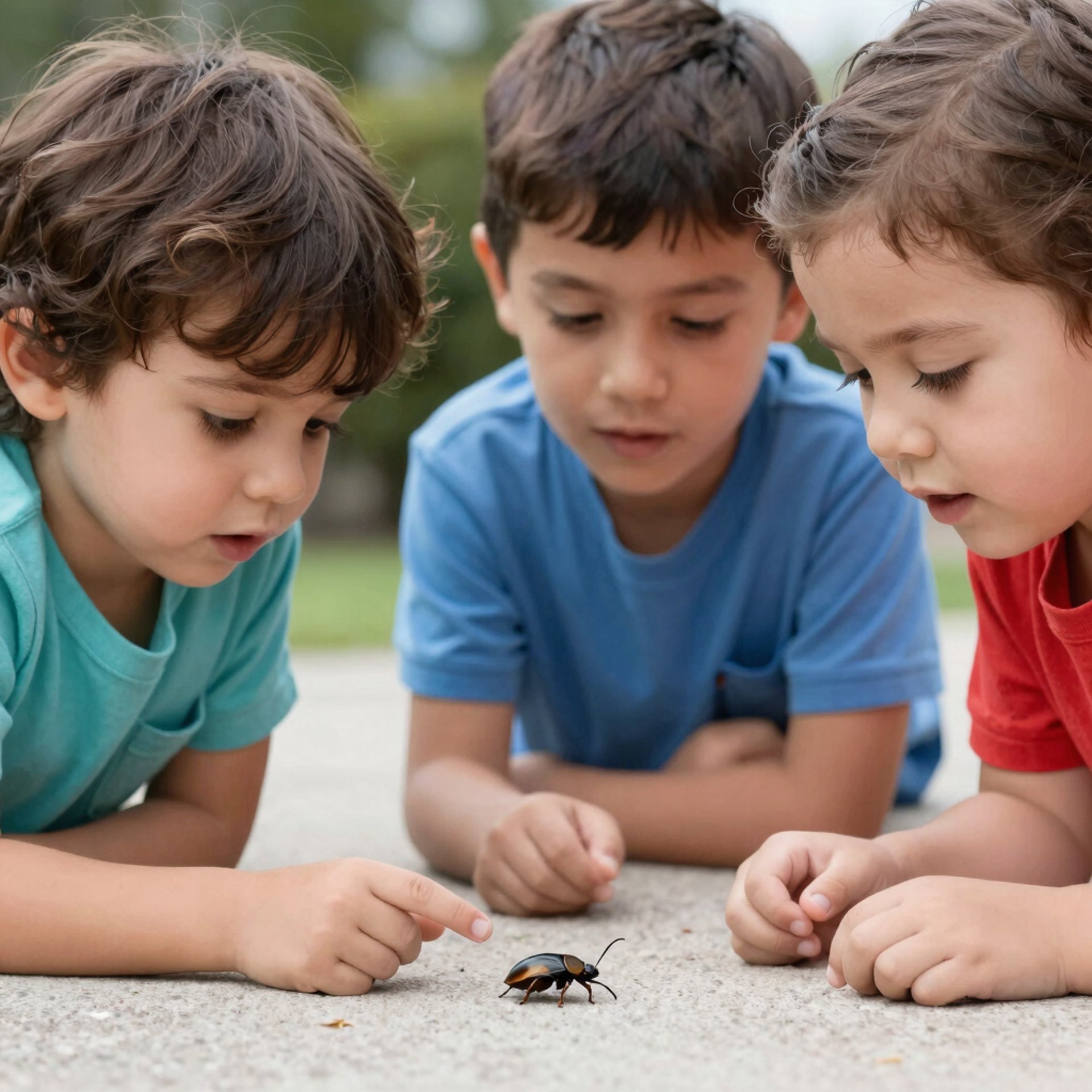
Encourage children to use magnifying glasses to examine plastic insects closely.
Discuss the different body parts of insects (head, thorax, abdomen, legs, antennae).
If you have live bugs, teach the children how to safely observe them, and how to safely release them.
Sorting and Classifying:
Have children sort plastic insects by type, size, or color.
Discuss the differences between insects and spiders (number of legs).
Bug Habitat Exploration:
Use pictures and books to discuss different bug habitats (gardens, forests, etc.).
Create a small "bug habitat" using natural materials like leaves, twigs, and rocks.
Art and Creativity:
Provide materials for children to draw or paint bugs.
Have them create bug collages using natural materials and craft supplies.
Have the children create playdough insects.
Dramatic Play:
Encourage children to pretend they are entomologists or bug explorers.
Use bug containers and nets to "catch" and observe bugs.
Science Exploration:
Discuss the life cycle of a butterfly or other insects.
Talk about the role of insects in the ecosystem (pollination, food chain).


Material Preparation and Arrangement:
Magnifying Glasses:
Provide several child-safe magnifying glasses.
Place them in a designated area for easy access.
Insect Containers:
Use clear plastic bug containers with ventilation holes.
If possible, include some with magnifying lids.
Place them in a central location.
Plastic Insects:
Provide a variety of realistic plastic insects (ants, beetles, ladybugs, butterflies, spiders, etc.).
Place them in clear containers or trays for easy sorting.
Optional Items:
Small nets for catching insects (outside, with supervision).
Pictures of real insects and their habitats.
Art supplies (paper, crayons, markers) for drawing bugs.
A small terrarium (optional, with safe, easy-to-care-for insects like pill bugs).
Small shovels, and small gardening tools.
Items from nature such as leaves, twigs, and small rocks.
Activities and Learning Opportunities:
Insect Observation:
Encourage children to use magnifying glasses to examine plastic insects closely.
Discuss the different body parts of insects (head, thorax, abdomen, legs, antennae).
If you have live bugs, teach the children how to safely observe them, and how to safely release them.
Sorting and Classifying:
Have children sort plastic insects by type, size, or color.
Discuss the differences between insects and spiders (number of legs).
Insect Habitat Exploration:
Use pictures and books to discuss different bug habitats (gardens, forests, etc.).
Create a small "bug habitat" using natural materials like leaves, twigs, and rocks.
Art and Creativity:
Provide materials for children to draw or paint bugs.
Have them create insect collages using natural materials and craft supplies.
Have the children create playdough insects.
Dramatic Play:
Encourage children to pretend they are entomologists or insect explorers.
Use insect containers and nets to "catch" and observe insects.
Science Exploration:
Discuss the life cycle of a butterfly or other insects.
Talk about the role of insects in the ecosystem (pollination, food chain).

Action & Fingerplay Songs
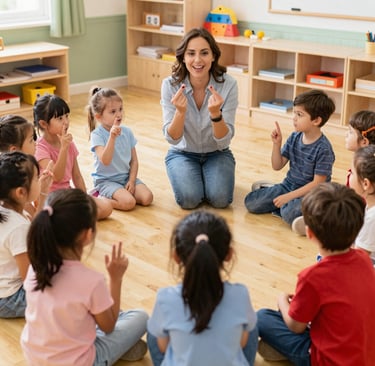
These are perfect for practicing fine motor skills and following step-by-step physical cues.
The Itsy Bitsy Spider
The Vibe: The ultimate fingerplay classic.
Movement: Touch thumb-to-index finger to climb up, drop hands for the rain, and sweep arms wide for the sun.
Bringing Home a Baby Bumblebee
The Vibe: Playful, slightly silly, and deeply memorable.
Movement: Cup hands together to "hold" the bee and gently shake them to the rhythm, then gently rub hands together to "wipe" the imaginary mess away at the end.
Here is the Beehive
The Vibe: Great for practicing counting and building a little suspense.
Lyrics & Action:
Here is the beehive, but where are the bees? (Hide fist behind back) Hidden away where nobody sees. Watch and you'll see them come out of the hive... One, two, three, four, five! (Bring fingers out one by one) Buzzzzzz! (Fly fingers around to tickle)
Gross Motor & Movement Songs
When the kids have lots of energy to burn, these songs get them up on their feet and exploring space.
The Ants Go Marching
The Vibe: A rhythmic marching song that is excellent for teaching counting and steady beat.
Movement: Have the children march in a circle or a straight line, holding up the correct number of fingers as the song counts from one to ten.
Flit, Flit, Flutterby (The Butterfly Song)
The Vibe: Gentle, imaginative, and great for transitions or winding down. (Sung to the tune of "Twinkle, Twinkle, Little Star")
Lyrics & Action:
Flit, flit, flutterby, fly up high into the sky. (Hook thumbs together and flutter fingers, reaching high) Fly down low into the sweet grass, flutter slow as you pass. (Swoop down toward the floor) Flit, flit, flutterby, fly up high into the sky.
Counting & Concept Songs
These integrate early math and rhythm, using bugs to track numbers visually.
Five Little Ladybugs
The Vibe: A countdown rhyme that keeps kids engaged to see where the next bug goes.
Lyrics & Action:
Five little ladybugs sitting on a door, One flew away and then there were four. Four little ladybugs sitting on a tree, One flew away and then there were three... (Continue counting down to zero)
Caterpillar, Caterpillar
The Vibe: Introduces the concept of metamorphosis through simple rhythm. (Sung to the tune of "Teddy Bear, Teddy Bear, Turn Around")
Movement: Crawl slowly on the floor like a caterpillar, roll up tightly into a ball (the chrysalis), and then stand up and extend arms like wide wings to fly away.
Books about Insects:
Provide a selection of age-appropriate books about bugs.
Place them in a reading nook or on a shelf within the center.
High-Energy & Movement Books
These are good choices when the group has a case of the "wiggles" and needs to channel that energy productively.
Circle Time Pro-Tip: Keep a "Mystery Bug Box" next to you. Before opening any of these books, pull out a plush or plastic insect representing the main character of the story to build anticipation and let the children guess what the book will be about!
Some Bugs by Angela DiTerlizzi, illustrated by Brendan Wenzel
Why it works: This book is an absolute masterpiece for circle time because it uses short, punchy verbs that beg to be acted out . The text is incredibly rhythmic and minimal, allowing the vibrant, oversized illustrations to take center stage.
Circle Time Action: Have the children mimic the bugs as you read. When the book says "Some bugs sting / some bugs bite / some bugs buzz into the night," the kids can buzz their fingers around or mimic a bug leaping through the air.
The Very Hungry Caterpillar by Eric Carle
Why it works: A timeless foundational classic that teaches the days of the week, counting, and the life cycle of a butterfly . The die-cut holes where the caterpillar "ate through" the food offer a wonderful visual cue for children sitting in a circle.
Circle Time Action: Let the children count the pieces of fruit out loud with you as you point to each hole. At the end, they can curl up tight into a "chrysalis" and then burst open into beautiful butterflies.
Interactive & Concept Books
These books integrate early math, science concepts, or social-emotional learning while keeping children actively engaged in the story.
The Very Grouchy Ladybug by Eric Carle
Why it works: This story introduces concepts of time, size comparison, and social manners. As the ladybug encounters progressively larger animals, the physical pages of the book get larger too, which naturally keeps a large group of kids watching intently.
Circle Time Action: Children love to practice their best "grouchy" faces every time the ladybug says, "Hey you! Want to fight?" It is a fantastic tool for talking about sharing and big feelings afterward.
Bugs! Bugs! Bugs tastically Fun (or Bugs! Bugs! Bugs!) by Jennifer Dussling
Why it works: Perfect as an informational text for an early science unit, this book uses simple, clear text features to teach how real insects live, hide, and protect themselves without being overwhelming or scary.
Circle Time Action: Use the colorful, clear layouts to play a quick game of "I Spy" with the group, asking them to spot where the insect is hiding or identifying its body parts (like wings or antennae).
Lyrical Nonfiction & Storytelling
Great for settling down a group, these books use beautiful language and captivating visuals to introduce real insect behaviors.
Wait and See by Helen Frost
Why it works: An outstanding example of "lyrical nonfiction," this book utilizes stunning photographic illustrations to trace the life of a praying mantis. The contrasting light and dark backgrounds spark wonderful natural conversations about day, night, and animal camo.
Circle Time Action: Because it relies on real-life photography, pass a magnifying glass around the circle afterward with a few safe plastic toy insects to let the kids practice being real backyard scientists.
Insect Matching Games:
Create matching games with pictures of bugs and their names or habitats.
Use real insect specimens (if available and ethically sourced) to create matching games with preserved bugs and images.
Insect Life Cycle Exploration:
Provide materials to create visual representations of insect life cycles (e.g., butterfly, ladybug).
Use clay, pipe cleaners, and other craft supplies to create models of different life stages.
Insect ovement Activities:
Have children imitate the movements of different insects (e.g., crawling like an ant, flying like a butterfly).
Create an obstacle course that mimics insect movement patterns.
"Insect Detective" Challenges:
Hide plastic insects or pictures of insects around the center.
Provide clues and magnifying glasses for children to find them.
Have the children draw maps of where they found the insects.
"Build a Insect " Activity:
Provide craft supplies (pipe cleaners, beads, googly eyes, etc.) and have children create their own unique bug designs.
Discuss the different body parts and functions of insects.
Sensory Experiences:
Insect Sounds:
Play recordings of insect sounds (e.g., crickets chirping, bees buzzing).
Use insect sound apps or websites to enhance the experience.
Insect Smells:
Introduce natural scents that attract or repel insects (e.g., mint, lavender, citrus).
Insect Textures:
Provide materials with different textures that mimic insect bodies (e.g., smooth stones, rough bark, soft feathers).
Have children create sensory bins with different textures for bug exploration.
Collaborative Insect Mural:
Create a large mural of a insect habitat and have children add their own bug drawings or creations.
Virtual Field Trips:
Take virtual field trips to insect museums or nature reserves.
Use online resources to explore different insect species and habitats.
Insect Identification Apps:
Use bug identification apps to help children identify insects they find outside.
Microscope Camera:
Use a digital microscope or camera to magnify insects and project them onto a screen.
Questions? Comments? Concerns?
info@joyfulletters.com
Affiliate Disclosure: Some of the links on this page are affiliate links. As an Amazon Influencer, a Walmart Partner, and an affiliate for select educational brands, I earn a small commission from qualifying purchases. This never raises the price for you. I only recommend items that add true value to a play-based learning environment. Thank you so much for supporting our page!
© Joyful Letters 2025-2026 ALL RIGHTS RESERVED. Permission is given to reproduce for individual classroom use. Our content material is not to be resold.