Grown-Up Goals. Kid-Sized Joy. Learning in disguise.
Frozen Sensory - Summer Fun
This activity is wonderful for little ones—it keeps them deeply engaged, feels like a real science experiment, and is incredibly satisfying when they finally "rescue" their treasures.
Activity: The Great Ice Rescue
What You Need:
The Ice Sheet: A large, shallow baking sheet, casserole dish, or plastic storage bin lid.
The Treasures: Small plastic toys (dinosaurs, bugs, loose gears, or plastic letters).
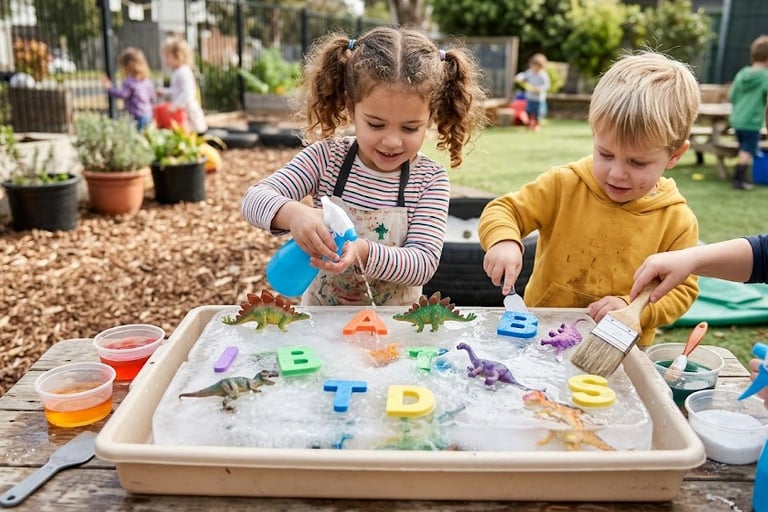
Tools: Squeeze bottles, spray bottles, medicine droppers, chunky paintbrushes, small plastic sprayers, and kid-safe tools like plastic tweezers or magnifying glasses.
Melters: Warm water, small bowls of coarse salt, and optional food coloring or liquid watercolors.
Setup (The Day Before)
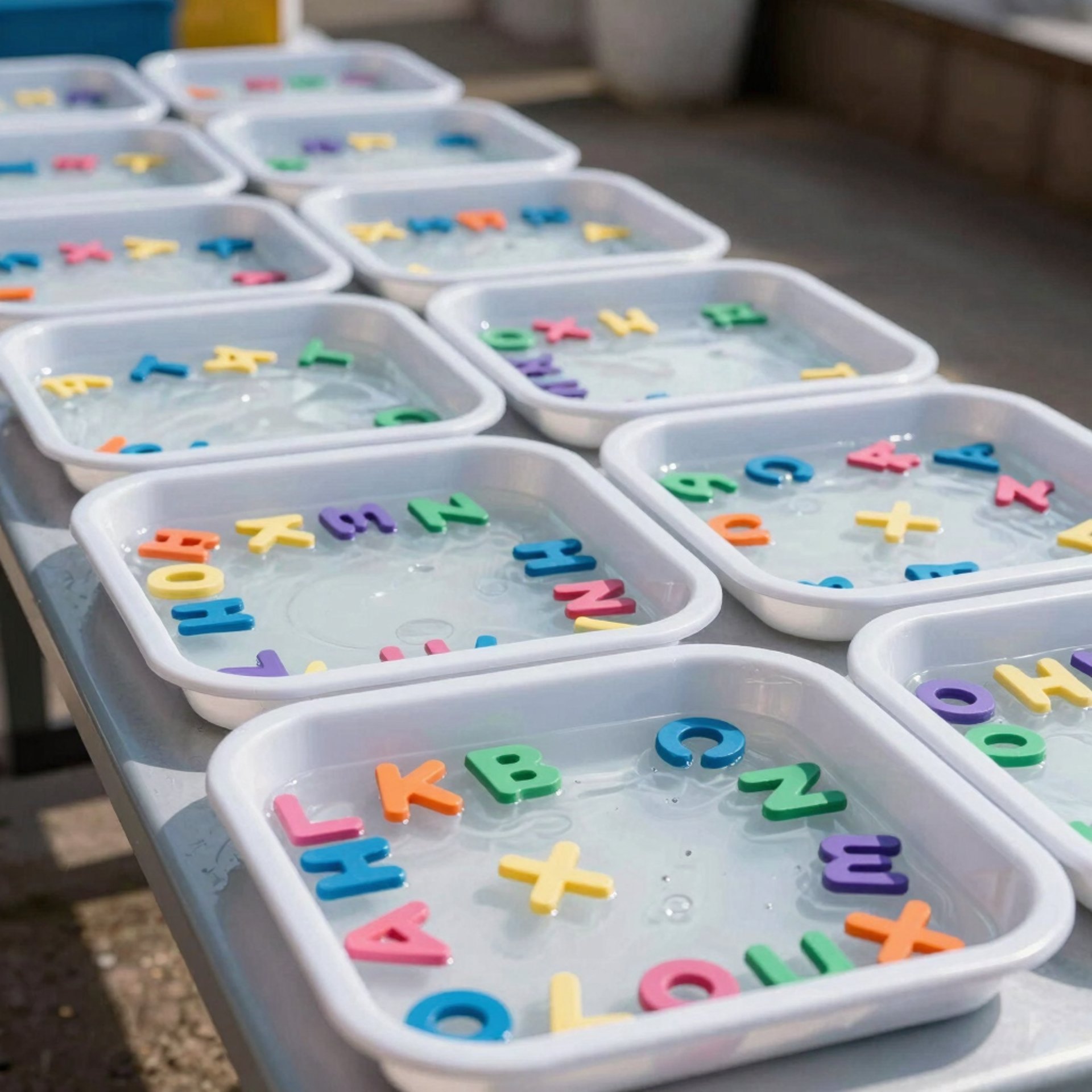
Pour a thin layer of water into your baking sheet and freeze it. This prevents all the toys from sinking to the very bottom.
Place the toys randomly on top of the frozen layer.
Fill the rest of the sheet with water (leave a little room at the top for expansion) and freeze overnight. Tip: Mix a drop of blue food coloring into the water to make it look like an arctic glacier!
Fun Ways to Free the Toys
Give children a variety of tools so they can experiment with different physical and chemical melting methods.
The Melt & Squeeze (Thermal Transfer):Easiest for little hands.
Give kids squeeze bottles or eye droppers filled with warm water. When they squirt the water onto a specific spot, they will watch channels and tunnels instantly melt into the ice sheet.
The Salt Sprinkle (Chemical Reaction):Fascinating texture changes.
Provide small bowls of coarse salt and spoons. When salt hits the ice, it lowers the freezing point of water. Kids will love listening to the ice crackle and watching it form deep, crater-like pits where the salt "eats" through.
Chipping & Scraping (Mechanical Force):Great for physical energy.
If the ice is firm, a kid friendly hammer, a wooden mallet, a metal spoon can be used for chipping. If the ice is slushy, give them sturdy plastic spoons, thick paintbrushes, plastic play-dough tools. They can scrape away the slushy layers or gently chip at loose edges to pry a half-melted toy free.
The Solar Assist (Environmental):Perfect for outdoor play.
If it is a warm day, take the bin outside! Have the kids predict which toys will break free first—the ones sitting in the direct sunlight or the ones in the shade.
The Sun vs. Shade Challenge (Scientific Prediction): On a warm day, move the activity outdoors. Before starting, have the kids predict which toys will break free first—the ones sitting in the direct sunlight or the ones tucked away in the shade. It’s a perfect, hands-on introduction to the power of solar heat!
Color-Mixing Melters (Art & Science): Give the kids bowls of warm water to melt the ice, but add a colorful twist: tint the water with primary colors (red, yellow, or blue) using food coloring or watercolors. As they pour and spray the warm water onto the ice sheet, the colors will pool and blend together, letting them experiment with color theory on the fly.
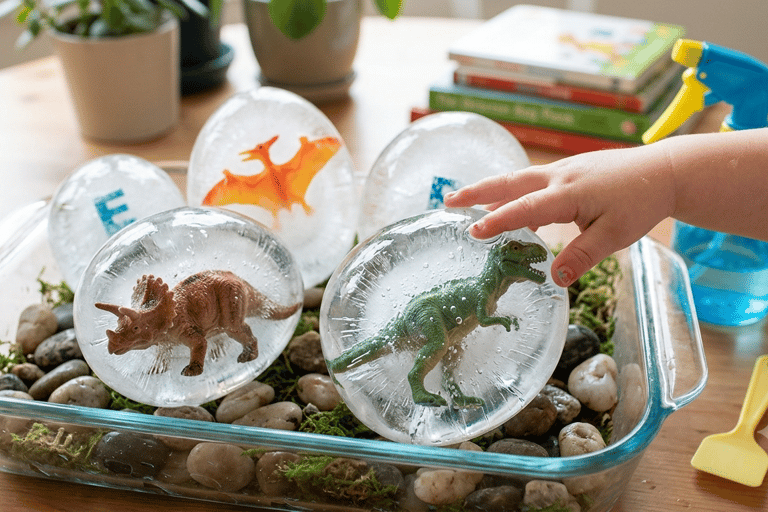
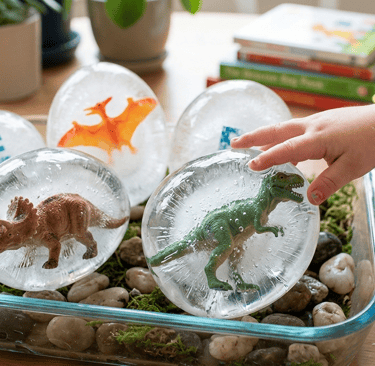
The "Dino Egg" Twist (Alternative Setup): For a completely different sensory shape, stretch open a balloon, drop a small plastic dinosaur or animal inside, fill it with water, and tie it off before freezing. Once frozen, peel away the balloon to leave the children with smooth, frozen "dinosaur eggs" to excavate.
Skills Developed During Play
Fine Motor Coordination: Squeezing spray bottles, pinching eye droppers, and manipulating small paintbrushes builds up the intrinsic muscles in a preschooler's hands. This strength is crucial for later pencil grip and scissor cutting.
Scientific Inquiry & Problem Solving: Children organically test hypotheses. They learn cause-and-effect firsthand: "If I use warm water, the ice melts fast. If I use cold water, it doesn't do much."
Sensory Processing: They experience temperature contrasts (freezing ice vs. warm water) and texture shifts (smooth, hard ice turning into grainy, melting slush).
Patience and Persistence: Toys do not pop out instantly. Working at a frozen block for 15 to 20 minutes builds stamina, focus, and emotional regulation when managing minor frustrationsSo much for
Adapting this activity for early literacy turns abstract concepts like letter shapes and phonetic sounds into a highly memorable, physical experience. When a child literally chips a letter out of a glacier, that letter sticks in their brain!
Here are a few ways to structure the game depending on what your kids are ready for:
The "Letter Rescue" Match (Letter Recognition)
Instead of random toys, freeze plastic refrigerator magnets or foam letters in your sheet of ice.
The Setup: On a large piece of cardboard or a cookie sheet next to the ice bin, write out the alphabet in permanent marker (or just the specific letters you froze).
The Gameplay: As children excavate a letter, they have to identify it and match it to the corresponding letter on the board.
Peer Voice Tip: If they pull out a "B", you can say: "You rescued B! Can you find his home on our map?"
Mystery Phonics Dig (Letter Sounds)
This twist flips the activity from visual matching to auditory decoding.
The Setup: Freeze small plastic items that have very distinct, clear starting sounds (e.g., a plastic Bear, a Car, a Dinosaur, a Fish).
The Gameplay: Before they can fully claim their rescued prize, they have to tell you the sound it makes.
Phonics Prompt: "You freed the dinosaur! What sound does /d/ /d/ dinosaur start with? Can you make the sound?"
Level Up: Spell Your Name
For older children (ages 4–5) who are starting to recognize the structure of words, name spelling is the perfect bridge.
Targeted Freezing - Freeze only the letters of the child's name in the ice block. If you have multiple kids, color-code the ice (e.g., Leo's letters are in green ice, Sam's are in yellow ice).
Provide a Blueprint - Write their name clearly on a card right next to the bin so they have a visual guide to follow.
Orderly Assembly - Challenge them to line up the letters in the correct order as they free them. If they find the "O" before the "L" for Leo, they practice patience by leaving space for the first letter.
Vocabulary Booster: While they play, introduce rich descriptive words to build their oral language. Instead of just saying "cold" or "wet," use words like solid, liquid, transparent, dissolve, and excavate.
Questions? Comments? Concerns?
info@joyfulletters.com
Affiliate Disclosure: Some of the links on this page are affiliate links. As an Amazon Influencer, a Walmart Partner, and an affiliate for select educational brands, I earn a small commission from qualifying purchases. This never raises the price for you. I only recommend items that add true value to a play-based learning environment. Thank you so much for supporting our page!
© Joyful Letters 2025-2026 ALL RIGHTS RESERVED. Permission is given to reproduce for individual classroom use. Our content material is not to be resold.