Grown-Up Goals. Kid-Sized Joy. Learning in disguise.
Bubbles, Bubbles
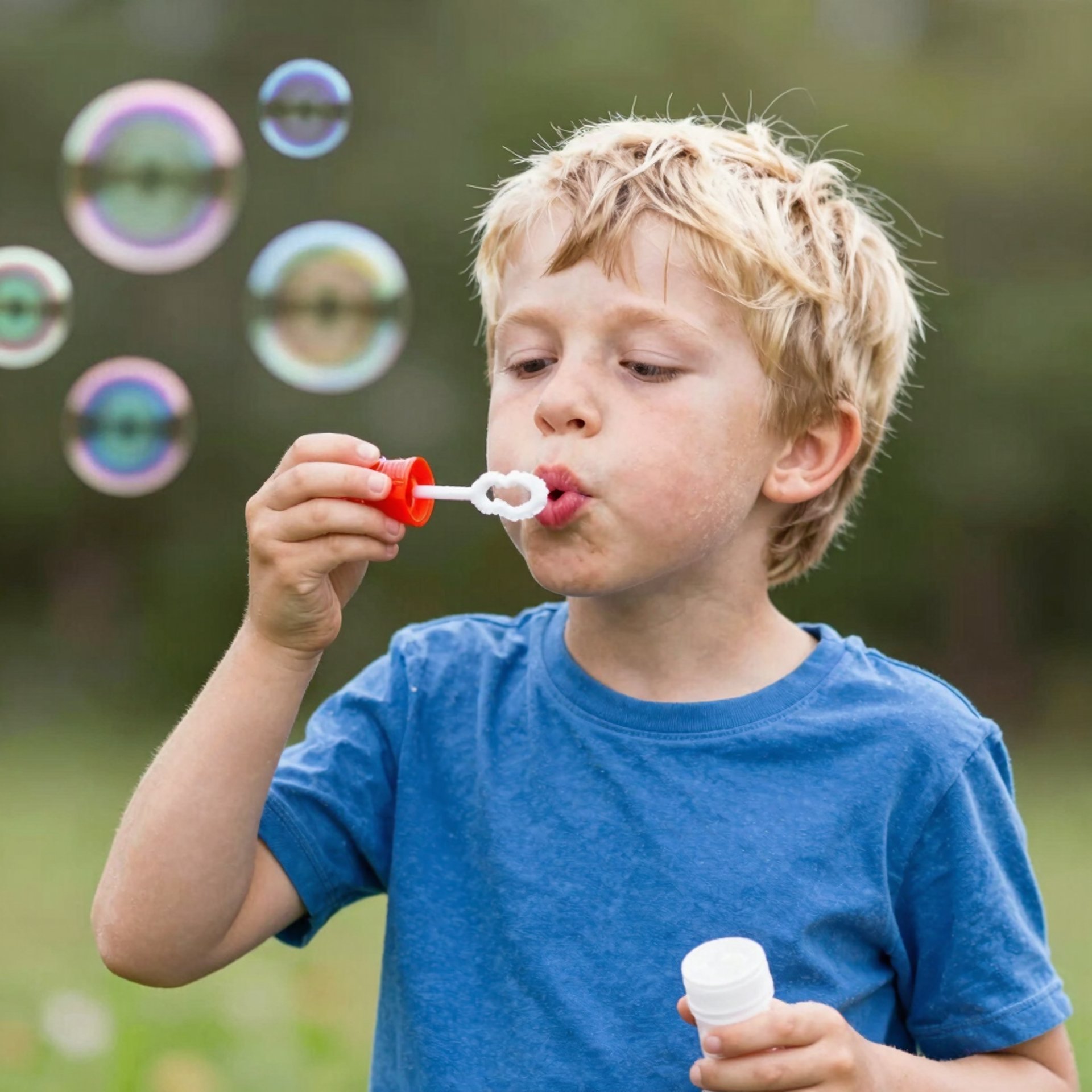
For preschool-aged children, soap bubbles are sensory, temporary, and pure magic as a medium for artistic and scientific exploration.
Here are several ways to incorporate soap bubbles into your curriculum:
Artistic Bubble Activities
Bubble Printing (The "Bubble Paper" Technique):
The Setup: Mix a small amount of tempera paint, water, and Dawn dish soap in a shallow cup.
The Process: Give each child a straw. Show them how to blow out (not in!) to create a mountain of colored foam that rises above the rim of the cup. Gently press a piece of cardstock onto the bubbles. When lifted, it leaves beautiful, lacy, circular patterns on the paper.
Washable Ingredients: Always use non-toxic, washable tempera paints. If you are worried about staining, choose lighter colors (yellow, light blue) rather than deep reds or purples.
"Blow Out, Not In": This is the golden rule! Practice this with a dry straw first (maybe blowing a pom-pom across the table) before introducing the soapy liquid to ensure they understand the breathing technique.
Bubble Wand Painting:
The Setup: Use various bubble wands (star shapes, circles, multi-hole wands). Dip them into colored bubble solution.
The Process: Instead of blowing the bubbles, have the children use the wands like brushes to "stamp" or "sweep" the soapy color onto large butcher paper. It creates wonderful, faint, translucent circles.
"Soap Pump" Puffy Painting:
The Setup: In a clean foam soap dispenser, mix water, a drop of liquid glue (for texture/binding), and food coloring.
The Process: Children pump the "puffy" colored soap directly onto their paper. It creates 3D, tactile mounds of color that look like clouds. As it dries, the glue gives it a slightly shiny, stiff finish.
Washable Ingredients: Always use non-toxic, washable tempera paints. If you are worried about staining, choose lighter colors (yellow, light blue) rather than deep reds or purples.
Scientific & Sensory Play
Bubble "Oobleck" Sensory Tray:
Add a thick layer of bubble foam (whipped up with a hand mixer and dish soap/water) to a sensory table. Hide small plastic animals or "treasure" inside the foam for the children to find.
Shadow Bubbles:
Go outside on a sunny day. Use a flashlight or natural sunlight to help children observe the swirling rainbow colors inside the bubble film. Ask: "Why do you think the colors are moving?"
Bubble Engineering:
Provide various "wands", store bought or made from recycled materials—a plastic six-pack ring, a slotted spoon, or a pipe cleaner bent into a square. Ask the children: "Do you think we can make a square bubble?" (They will discover that the surface tension always pulls the bubble into a sphere!)
Tips for Preschool Success
Outdoor Focus: Because bubbles can be messy, these activities are best suited for your outdoor patio or grass area.
Everyday Bubble Solution
Best for refilling standard bubble wands, straw-blowing, and general classroom use.
1 cup warm water
4 tablespoons dish soap (Blue Dawn or Joy work best)
1 tablespoon light corn syrup (or glycerin)
Instructions:
Pour the warm water into a clean container.
Slowly stir in the dish soap and corn syrup. Stir very gently to avoid creating foam; foam can actually make the bubbles pop faster!
Let the mixture sit for at least an hour (overnight is even better) to let the ingredients fully bond.
Strong Giant Bubble Solution
Best for outdoor activities, giant wands, and older preschoolers who are ready to experiment with larger forms.
6 cups warm water (distilled water works best if your tap water is very hard)
1 cup Blue Dawn dish soap
¼ cup light corn syrup (or 1 tablespoon vegetable glycerin)
Instructions:
Measure the water into a large bucket or tub.
Add the dish soap and stir slowly.
Add the corn syrup or glycerin. This is the "secret ingredient" that thickens the bubble film so it doesn't pop as quickly.
Again, let this sit for several hours or overnight. If you find the bubbles are still popping too quickly, you can experiment by adding an extra tablespoon of your thickening agent.
Pro-Tips for Preschool Bubble Success:
The "Soap" Secret: Dish soap brands vary in concentration. If your bubbles aren't forming well, try adding a little more soap. Blue Dawn is a consistent favorite among educators.
Storage: Keep your bubble solution in an airtight container in a cool, dark place. It "keeps" indefinitely, so you can make a big batch ahead of time.
Avoid the "Grass" Contamination: When playing outside, pour only what you need into a shallow tray. Don't pour used solution back into your main bottle, as dirt and grass from the yard will break down the bubble film and make it stop working.
Water Type: If your local water is "hard," you might find that distilled or filtered water makes for much sturdier bubbles!
Questions? Comments? Concerns?
info@joyfulletters.com
Affiliate Disclosure: Some of the links on this page are affiliate links. As an Amazon Influencer, a Walmart Partner, and an affiliate for select educational brands, I earn a small commission from qualifying purchases. This never raises the price for you. I only recommend items that add true value to a play-based learning environment. Thank you so much for supporting our page!
© Joyful Letters 2025-2026 ALL RIGHTS RESERVED. Permission is given to reproduce for individual classroom use. Our content material is not to be resold.