Grown-Up Goals. Kid-Sized Joy. Learning in disguise.
Circles and Shapes
Exploring Circles and Shapes
Objective: Children will learn to recognize, create, and understand the properties of the circle shape through various engaging and interactive activities. This activity will promote fine motor skills, spatial awareness, and creativity while incorporating fun and movement into learning.
Materials Needed:
- Various circular objects (e.g., plates, balls, buttons, coins, lids
- Large paper or chart paper
- Crayons or markers
- Scissors (for teacher use)
- Glue
- String or yarn
- Circle-shaped stencils (optional)
- Music player for circle games
Optional Items:
Circular mirrors
Circular puzzles
Circular books
Circular natural materials (slices of oranges, round rocks)
Circular sensory materials (round playdough cutters, circular water beads)
Circular magnifying glass
Circular light table (if available)
Circular pictures or posters
Circular themed games.
Circle Discovery:
- Begin with a group discussion about what a circle is. Ask questions such as, "What does a circle look like? Can you find something round in our classroom?"
- Show the children the various circular objects you gathered. Let them touch, hold, and examine the objects while discussing their characteristics (e.g., roundness, smoothness).
- Encourage the children to identify items in their own lives that resemble circles (e.g., wheels, fruits).
Circle Art:
- Distribute large sheets of paper and crayons or markers to each child.
- Instruct the children to draw their own circles using the crayons and to fill them in with colors or patterns. If they can, encourage them to use the circular stencils to create different sizes and designs.
- As they draw, engage with each child individually and ask them to describe their artwork, promoting vocabulary development.
Circle Movement Games:
- Gather the children in a spacious area for a fun movement game.
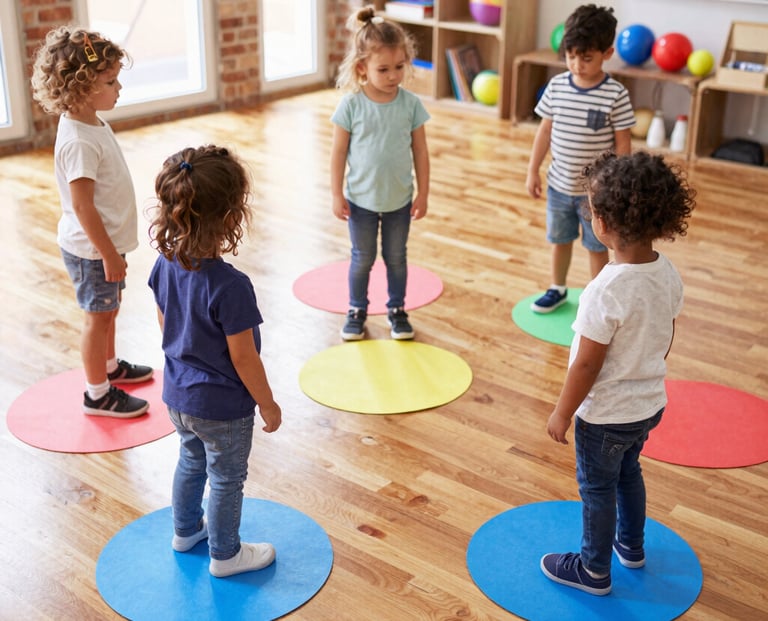
- Play "Musical Circles": Scatter the circular objects on the floor and play music. When the music stops, children must find a circle to stand on. Each round, remove one circular object until only one remains.
- Alternative Game: Play a game of "Circle Freeze Dance" where children dance around in a circle and freeze when the music stops. Encourage them to strike a pose that represents a circle (e.g., standing with arms wide, mimicking a hula hoop).
Circle Collage:
- After the games, gather the children around a table, and explain that they will make a circle collage.
- Provide scissors for the teacher to assist with cutting out circles from colored paper, magazines, or old wrapping paper.
- Help children glue their circle cutouts onto their large sheets of paper, combining various sizes and colors to create a unique piece of circle art.
- Display the finished collages around the classroom to celebrate their creativity and comprehension of the circle shape.
Extensions:
Circle Blocks:
Provide circular blocks of various sizes and materials (wooden, plastic, foam).
Organize them in a round bin or on a round shelf.
Encourage children to build structures with circular blocks.
Circle Cutouts:
Provide circle cutouts of different sizes, colors, and textures (paper, cardboard, felt).
Include circle stencils and hole punches.
Circle Toys:
Gather circular toys of various types (balls, wheels, rings, stacking rings).
Arrange them in a visually appealing way.
Shape Recognition:
Focus on identifying and naming the circle shape.
Play "I Spy" with circular objects.
Sorting and Classifying:
Have children sort circular objects by size, color, or type.
Sort circular items from other shaped items.
Dramatic Play:
Use circular toys to create imaginative play scenarios.
Have them act out stories or role-play with circular props.
Circular Book Reading:
Read books that feature circles or circular objects.
Discuss the different sizes and types of circles.
"Circle Storytelling":
Use circular objects and props to create stories.
Encourage children to incorporate the circle shape into their narratives.
Circular themed games:
Create matching games with circular items.
Create a circular scavenger hunt.
"Circle Movement Activities":
Use hula hoops, balls, or circular scarves for movement and dance activities.
Create circular-themed movement games (e.g., rolling, spinning, circling).
Circle-Themed Music:
Play songs about circles or songs with circular themes.
Use circular instruments or create circular shakers with different materials to explore circular-related sounds (e.g., rolling sounds, spinning sounds).
Visual Displays:
Create a circle-themed display with pictures of circular objects and scenes.
Have them create artwork using circle cutouts and art supplies.
Have the children create patterns using the circle cut outs.
Set up an art station with circular stencils, round sponges, and round paper.
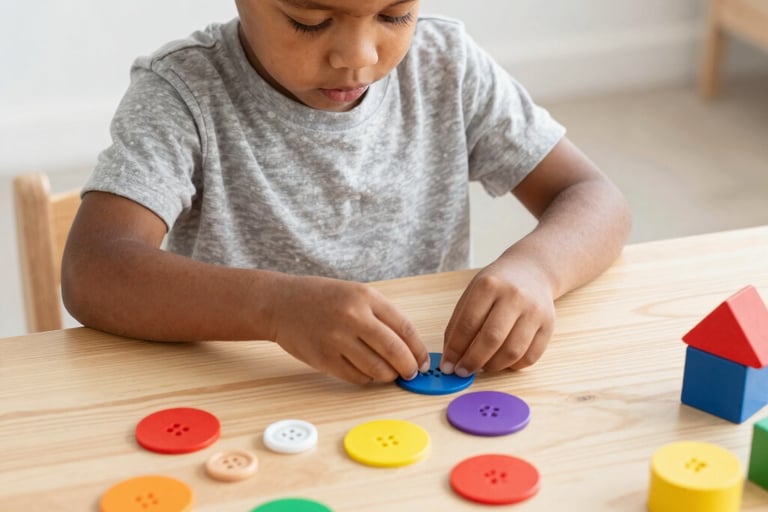
Circular Light Play:
Use a circular light table or a flashlight with a circular filter to explore how light interacts with circular objects.
Project circular shadows onto the walls or ceiling.
Circular Sensory Bins:
Create sensory bins with circular materials (e.g., round playdough cutters, circular water beads, round pom-poms, round sand molds).
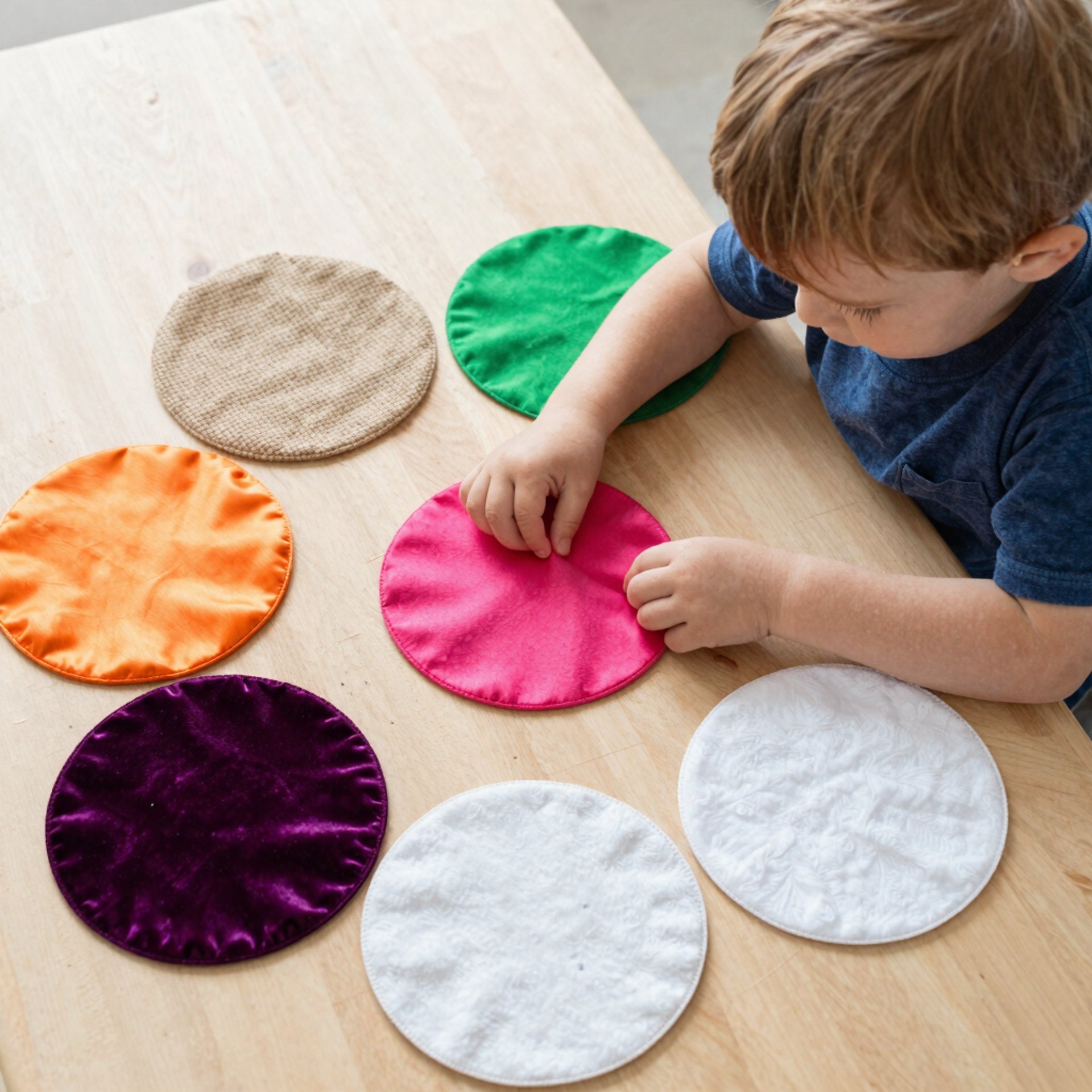
Provide a variety of circular fabrics with different textures (velvet, silk, cotton). Encourage children to explore the fabrics and describe how they feel.
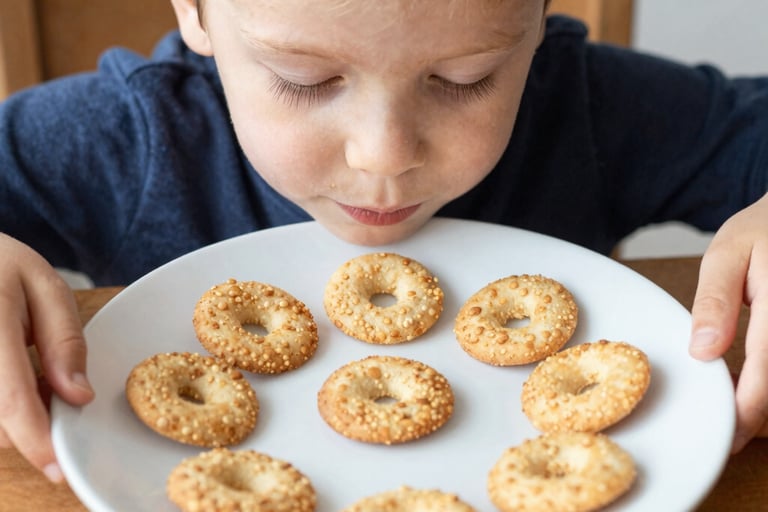
Circular Snack:
Provide a snack of circular food. (cookies, apple slices, etc.)
"Circle Detective" Games:
Hide circular objects around the center and provide clues for children to find them.
Use a circular magnifying glass to examine the objects closely.
Wrap-Up Discussion :
- Invite the children to share their favorite part of the activity. Discuss what they learned about circles and where they can find them in the world around them.
- Use the opportunity to reinforce shape recognition and encourage children to look out for more circles in their daily lives.
Conclusion: The Circle activity is an effective way to introduce preschoolers to the concept of shapes, emphasizing fun, interaction, and creativity. By exploring circles through various modes of learning, children will not only recognize this shape in their environment but also enhance their cognitive, social, and motor skills through play. This engaging activity paves the way for understanding shapes, setting the foundation for future math concepts while encouraging a love for exploration.
Questions? Comments? Concerns?
info@joyfulletters.com
Affiliate Disclosure: Some of the links on this page are affiliate links. As an Amazon Influencer, a Walmart Partner, and an affiliate for select educational brands, I earn a small commission from qualifying purchases. This never raises the price for you. I only recommend items that add true value to a play-based learning environment. Thank you so much for supporting our page!
© Joyful Letters 2025-2026 ALL RIGHTS RESERVED. Permission is given to reproduce for individual classroom use. Our content material is not to be resold.